6 Video Interviewing Trends for Recruiter: Transforming Recruitment for Employers in 2026
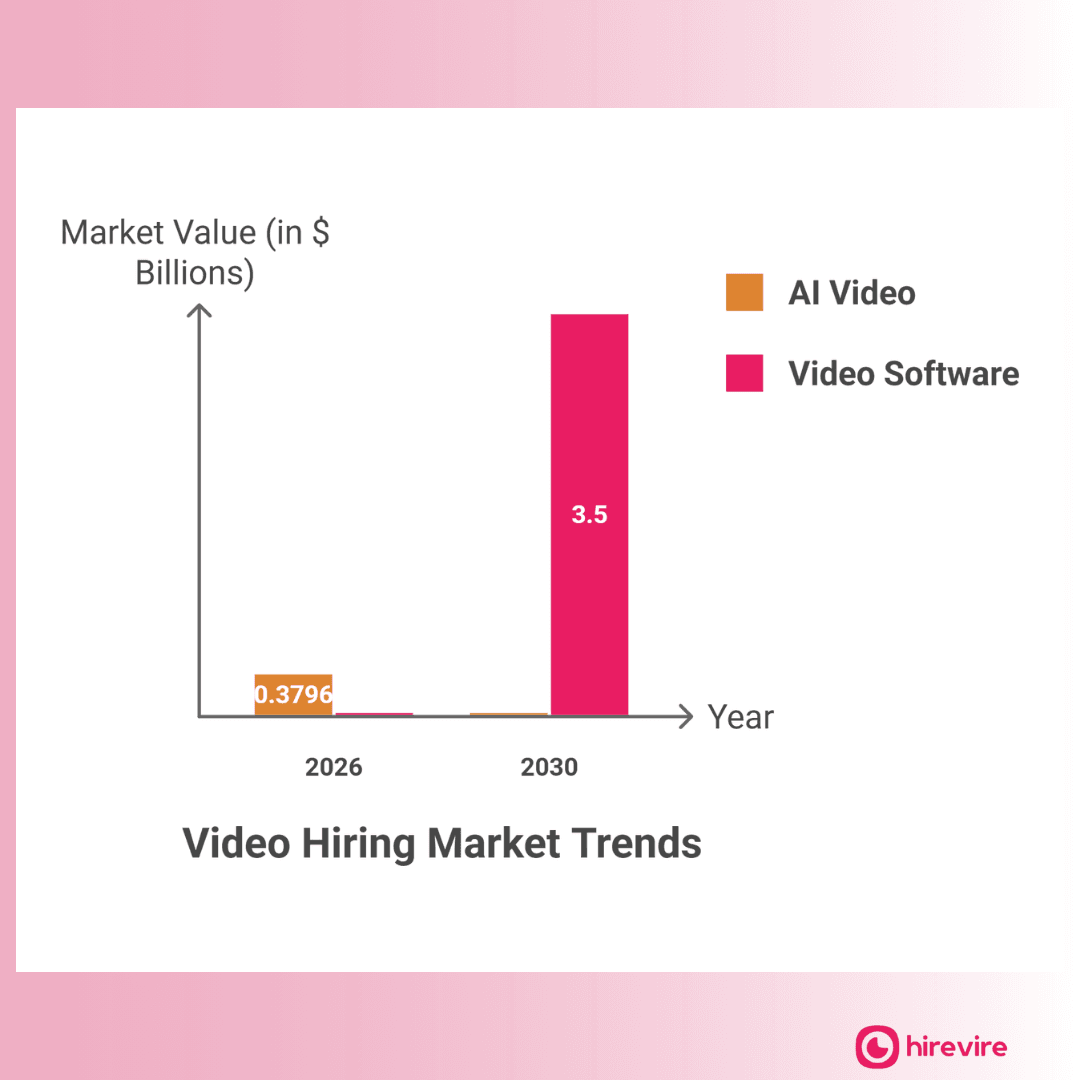
The video interview software market is growing at a 20% compound annual growth rate and is projected to reach $3.5 billion by 2030, according to Business Research Insights. That growth rate isn't driven by one factor — it's the compounding effect of remote hiring becoming permanent, AI-powered video taking over a dominant market share, and candidates actively expecting virtual screening options as standard practice.
For recruiting teams, this market shift has direct operational consequences. The phone screen is becoming legacy behavior. Candidate expectations around scheduling flexibility have reset. And companies that haven't built video into their early-stage screening process are now operating at a structural disadvantage in competitive talent markets.
This article covers the six trends driving video hiring growth in 2026, the data behind each, and what they mean for teams building hiring processes that can compete.
Key Takeaways:
- 70% of job applicants now expect virtual interview options — the phone screen is in decline
- AI-powered video is projected to hold 37.96% of the entire online recruitment market in 2026
- 42% of candidates abandon applications when interview scheduling drags — async video directly addresses this
- Hirevire is purpose-built for this market shift: async video screening that sets up in minutes and eliminates scheduling friction
What's Driving the Video Hiring Boom
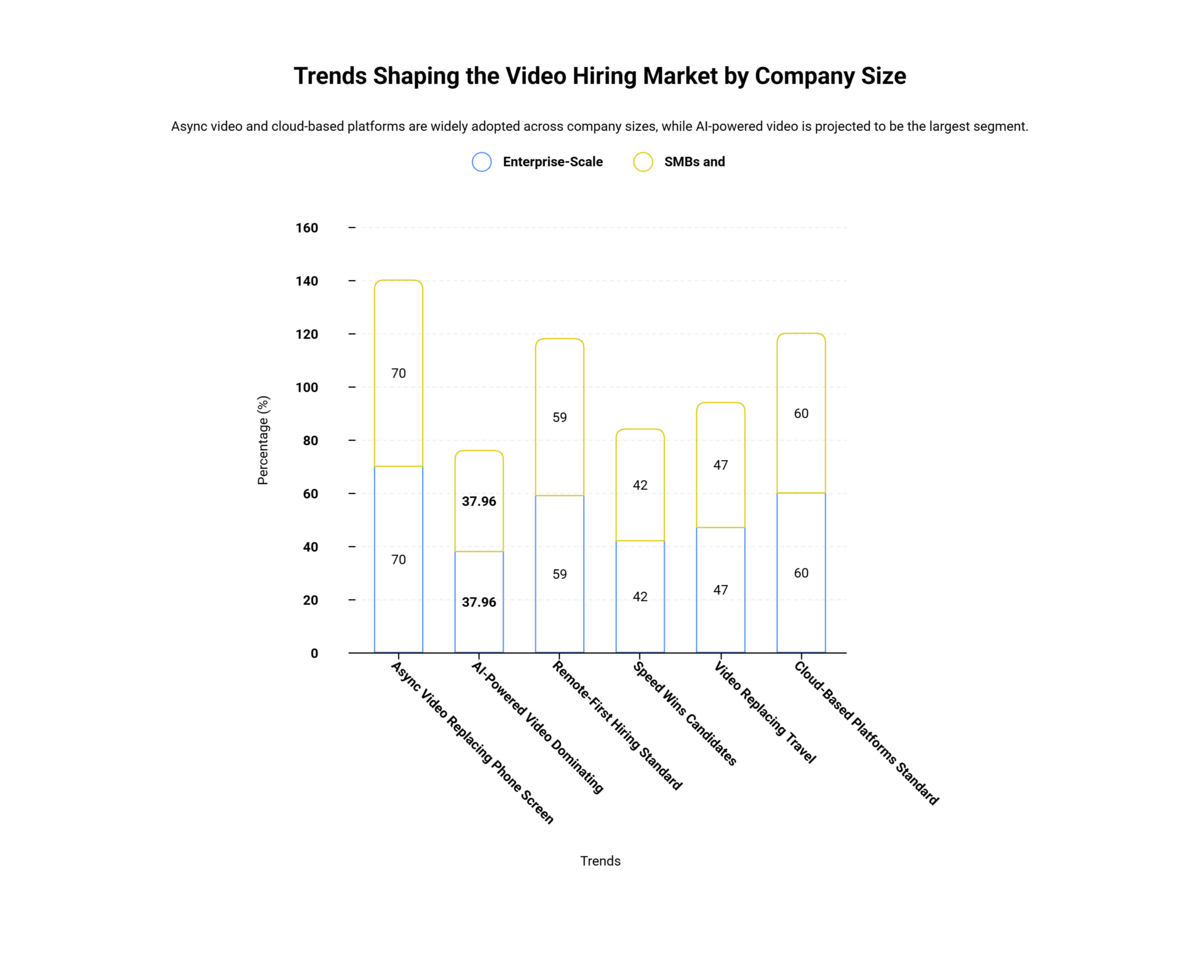
The video interview software market's growth is not new — it accelerated sharply during the pandemic and has not reversed. What is new in 2026 is the maturity of the market and the emergence of AI-powered capabilities that are changing the competitive dynamics.
The HTF Market Intelligence report identifies three converging forces: the normalization of remote work creating permanent demand for virtual hiring infrastructure, AI integration making video analysis faster and more structured, and mobile-first candidate populations making flexibility in interview format a baseline expectation rather than a premium offering.
The result is a market that is both growing quickly and bifurcating. Tools built for enterprise-scale, high-volume video analysis are competing in a different segment than tools designed to give SMBs and growing companies flexible, accessible async screening. Understanding which segment your team's needs fit is the starting point for making the right investment.
The six trends below shape where the market is going and what the operational implications are for recruiting teams at every size.
Trend 1: Async Video Is Replacing the Phone Screen
70% of job applicants now expect virtual interview options, according to Second Talent's 2026 job interview statistics. That expectation is not just about preference — it reflects a shift in how candidates evaluate the hiring process before accepting.
The phone screen emerged as the standard first-stage contact because it was the most efficient synchronous format available. It required scheduling coordination and real-time participation from both sides, but it provided more signal than a resume alone. Async video provides the same upgrade to resume-only screening while removing the scheduling requirement entirely.
For recruiting teams, the operational impact of this shift is substantial. A recruiter managing 20 open roles with 3-4 phone screens per candidate per role spends 15-20 hours per week in scheduling coordination and call execution. Moving that screening stage to async video recovers those hours — candidates record on their own schedule, recruiters review on theirs, and hiring managers can watch the same responses without requiring separate briefings.
The phone screen is not disappearing immediately, but it is becoming the exception rather than the default first stage. Teams that have shifted to async screening report faster pipeline velocity and higher hiring manager engagement earlier in the process, because responses can be shared rather than described.
Small businesses feel this shift particularly acutely. A founder or operations lead doing their own recruiting does not have 15-20 hours for phone screens. Async video makes structured early-stage screening possible without that time commitment.
Trend 2: AI-Powered Video Is Set to Dominate Online Recruitment
The AI-powered video interview segment is projected to hold a 37.96% share of the entire online recruitment market in 2026, making it the single largest segment, according to Fortune Business Insights' Online Recruitment Technology Market Forecast.
That market share projection reflects significant enterprise investment in video analysis tools — platforms that use AI to transcribe, analyze, and sometimes score candidate responses. The growth is real and well-capitalized.
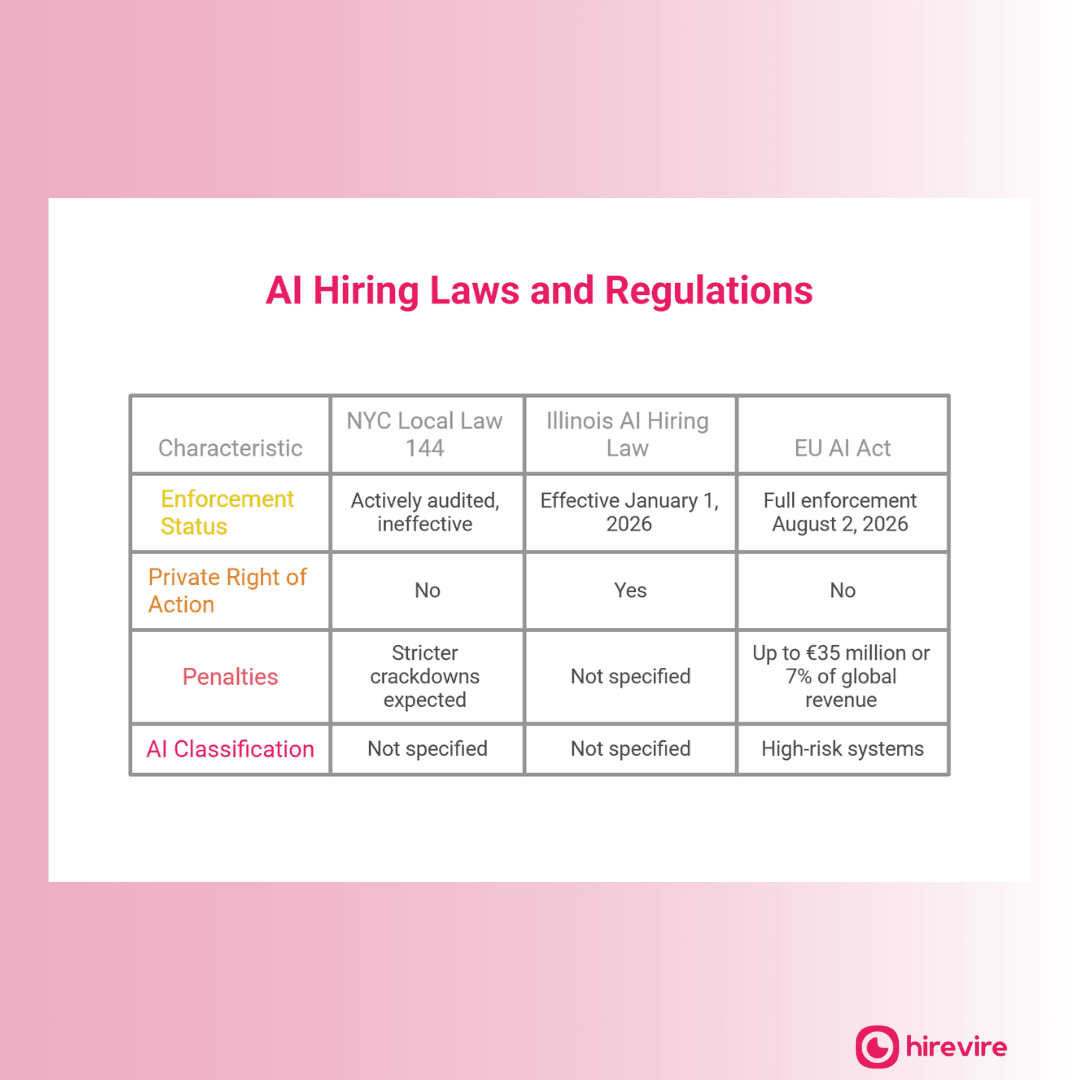
The critical distinction for recruiting teams is between AI video analysis (where AI interprets and scores candidate responses) and AI-assisted video workflows (where AI handles transcription, translation, and organization while humans make evaluation decisions). The former is facing mounting regulatory scrutiny under laws like NYC Local Law 144 and the EU AI Act. The latter provides efficiency without triggering the compliance requirements that apply to automated decision-making tools.
For most SMBs and growing companies, AI-assisted workflows are the appropriate entry point. Auto-transcription in 90+ languages, timestamp navigation, and collaborative review links — these are the features that reduce recruiter workload without creating algorithmic decision-making that candidates and regulators are increasingly skeptical of.
Hirevire provides AI-powered transcription and AI-generated summaries while keeping humans in the evaluation seat — no automated scoring, no algorithmic pass/fail recommendations. That design choice reflects where the market is heading: AI as a workflow tool, not an arbiter.
Trend 3: Remote-First Hiring Is Now the Standard, Not the Exception
59% of companies say remote hiring expands access to qualified talent, according to Second Talent's interview statistics. Remote-first hiring is no longer a pandemic accommodation — it's a sourcing strategy.
Video makes global sourcing scalable for teams that cannot support travel-based in-person screening rounds. A company in Chicago can evaluate candidates in Austin, London, and Singapore on the same timeline using the same screening format. Without video infrastructure, the company is effectively limited to local candidates or candidates willing to travel for early-stage screening — a constraint that limits pool quality and increases time-to-hire.
For recruitment agencies, remote-first hiring has changed the competitive landscape. Agencies that built remote hiring capabilities early can place candidates nationally and internationally rather than locally. Those capabilities require video infrastructure that supports asynchronous, timezone-agnostic screening.
The access point matters for smaller teams. An SMB that wants to hire a specialist they can't find locally needs video screening to make remote hiring operationally feasible, not just theoretically possible. Setting up a structured async video interview in Hirevire takes minutes — candidates in any timezone can complete it on their own schedule, and the recruiting team reviews responses without coordinating across time zones.
Remote-first hiring also changes candidate expectations. Candidates who have been through remote hiring processes at previous employers bring expectations about scheduling flexibility and video-based interaction that companies relying on phone screens and in-person-only stages don't meet.
Trend 4: Speed Wins Candidates — Slow Scheduling Kills Pipelines
42% of candidates abandon applications when interview scheduling drags, according to Second Talent's statistics. In competitive talent markets, this number translates directly into offers extended to second-choice candidates, roles that take weeks longer to fill, and cost-per-hire figures that compound the further the process falls behind.
The scheduling problem is structural in synchronous hiring processes. Every phone screen or video call requires finding a time that works for the recruiter, the candidate, and sometimes a hiring manager — across competing calendars, time zones, and availability windows. The average back-and-forth to schedule a single screen takes 2-3 emails and often introduces 3-5 days of delay.
Multiply that by 10-15 candidates per role and across 5-10 open roles simultaneously, and the scheduling coordination overhead consumes a disproportionate share of recruiting capacity while candidates continue their job searches with competing companies that move faster.
Async video removes scheduling coordination from the equation entirely. Candidates receive a link with a deadline — typically 48-72 hours — and record on their own schedule. Recruiters review when convenient. The fastest async screening pipelines move candidates from application to recruiter review within 24 hours, a timeline impossible with synchronous scheduling at any volume.
For growing companies competing against larger, better-resourced employers for the same candidates, speed is one of the few structural advantages available. Candidates often choose based on which company's process showed the most respect for their time. An async video process that moves in 24 hours signals something about how the company operates.
Trend 5: Video Is Replacing Travel — And the Budget Savings Are Going Back to Headcount
47% of professionals reduced travel because video replaced in-person rounds, according to Second Talent's 2026 interview statistics. The budget implications are substantial for companies that previously ran multi-city sourcing trips or flew final-stage candidates in for in-person interviews.
The math is straightforward. Flying two final-stage candidates in for interviews at a mid-sized company — travel, hotel, meals, lost recruiter time — can cost $3,000-5,000 per hire. Companies that use video for all rounds except a final in-person (or eliminate in-person entirely for remote roles) redirect that budget. At 20 hires per year, that's $60,000-100,000 in recovered budget that can fund an additional recruiter, a better ATS, or candidate experience improvements.
The behavioral shift is now well-established enough that in-person final rounds are increasingly reserved for senior or executive hires where the culture fit signal justifies the cost. For most individual contributor and manager-level roles, video has become the medium through which hiring decisions are made.
Candidates have adapted to this shift. The stigma around video-only processes — the sense that the company "didn't care enough" to bring someone in — has faded as the practice has become standard. Candidates now interpret a fast, well-structured video process as a signal of operational maturity rather than cost-cutting.
For hiring teams, the relevant question is no longer whether to use video but how to use it well. A poorly designed video screening process creates friction and drops off without providing useful signal. A well-designed one — structured questions, clear instructions, generous response time, responsive follow-up — is operationally superior to in-person rounds in most scenarios.
Trend 6: Cloud-Based Video Platforms Are Becoming the Standard Infrastructure
60% of organizations have adopted cloud-based video interviewing, according to The Insight Partners' Video Interviewing Software Market Analysis. On-premise and manual scheduling-dependent processes are declining as cloud-based platforms offer faster setup, better scalability, and integration capabilities that standalone tools cannot match.
The practical implication is that video interviewing is transitioning from a specialized capability to baseline HR technology infrastructure — in the same category as ATS systems and HRIS platforms rather than an add-on. Recruiting teams that have not yet established cloud-based video infrastructure are increasingly operating below the market standard.
Cloud-based platforms offer specific operational advantages that matter for growing companies: no installation or maintenance overhead, instant scalability when hiring volume spikes, integration with existing ATS and HRIS tools via APIs and Zapier, and centralized candidate response libraries that multiple team members can access.
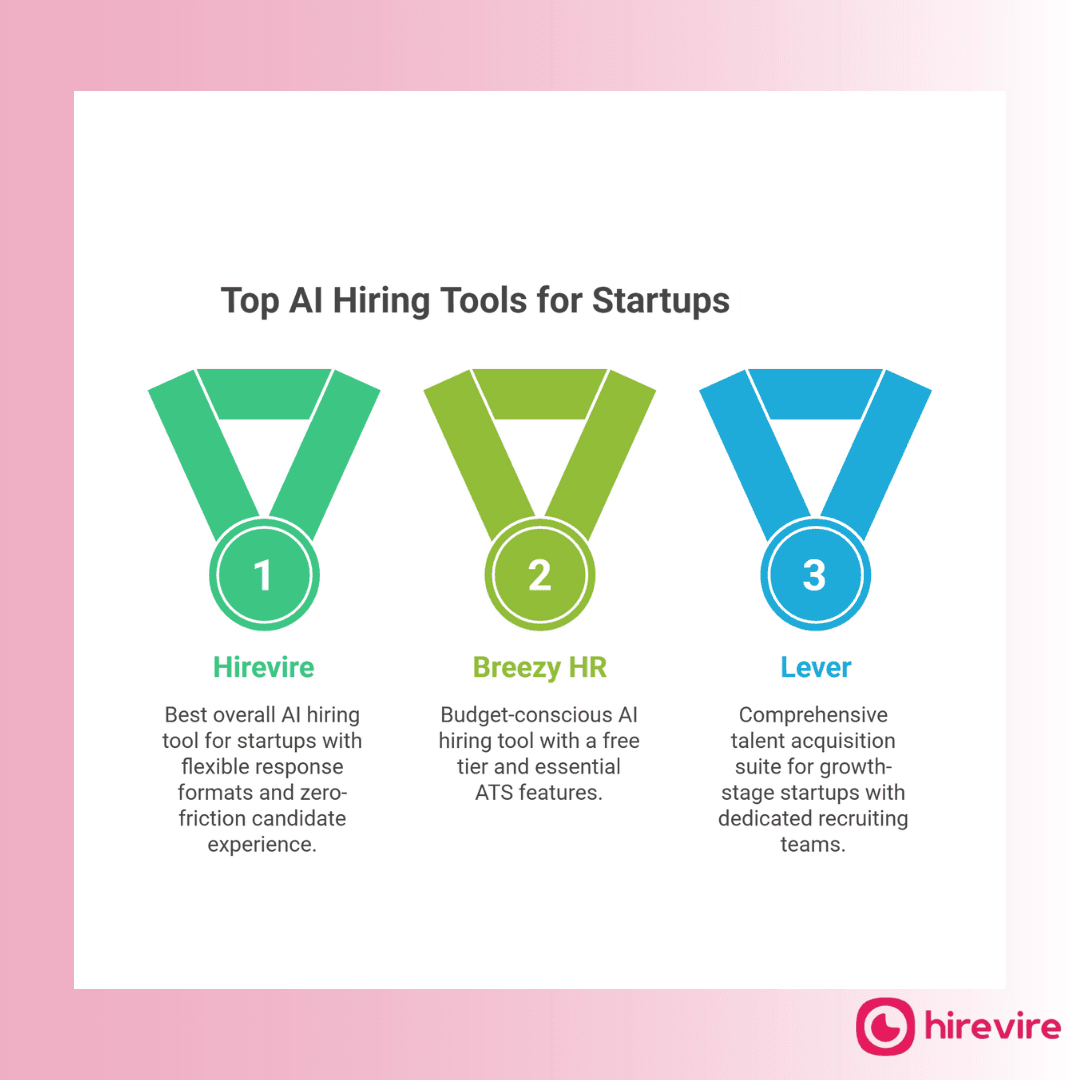
For SMBs and growing companies, the entry cost for cloud-based video interviewing has declined significantly. Enterprise-tier platforms built for Fortune 500 volume are one segment of the market. Tools like Hirevire, starting at $39/month, bring async video screening to teams that previously assumed it required enterprise budgets.
The 5,000+ integrations Hirevire supports via Zapier mean that video screening can slot into existing workflows — automatically moving candidates through an ATS pipeline when they complete a video screen, sending notifications to hiring managers, or triggering follow-up communications — without custom development work.
Cloud-based video infrastructure is the foundation on which the other five trends in this article run. Remote-first hiring requires it. Speed advantages depend on it. AI-assisted workflows are built on top of it. Companies that have not made this infrastructure investment are falling behind on all of the above simultaneously.
How Hirevire Positions Teams for the Video Hiring Future
As video becomes the infrastructure of modern recruiting, hiring teams need a platform that does not require enterprise resources to implement or maintain.
Hirevire is purpose-built for the shift documented in this article: async video screening that removes scheduling friction, multi-format responses that accommodate candidate preference, and AI-powered transcription that gives recruiters and hiring managers searchable, shareable screening records without algorithmic scoring.
For the async video shift. Candidates record video, audio, or text responses on their own schedule — no app download or account creation required. Recruiters share response links with hiring managers for collaborative review. The entire early-stage screening process happens without a single scheduled call.
For remote-first hiring. Hirevire's 90+ language transcription supports international candidates without additional tooling. Async responses work across time zones by design — candidates in Singapore and recruiters in New York participate on the same platform without coordination.
For compliance-ready processes. No algorithmic scoring means no automated employment decision tool triggering NYC Local Law 144, Illinois, Colorado, or EU AI Act requirements. Human reviewers evaluate responses directly, maintaining the auditable, human-supervised process regulators are requiring.
For SMB budgets. Hirevire's Essentials plan starts at $39/month — less than the cost of scheduling coordination time for a single hire. The market is moving toward video screening as standard practice, and the entry point has never been lower.
Try Hirevire free and see how your team can build the video hiring infrastructure the market is moving toward.
Action Steps: Building a Video-First Hiring Process in 2026
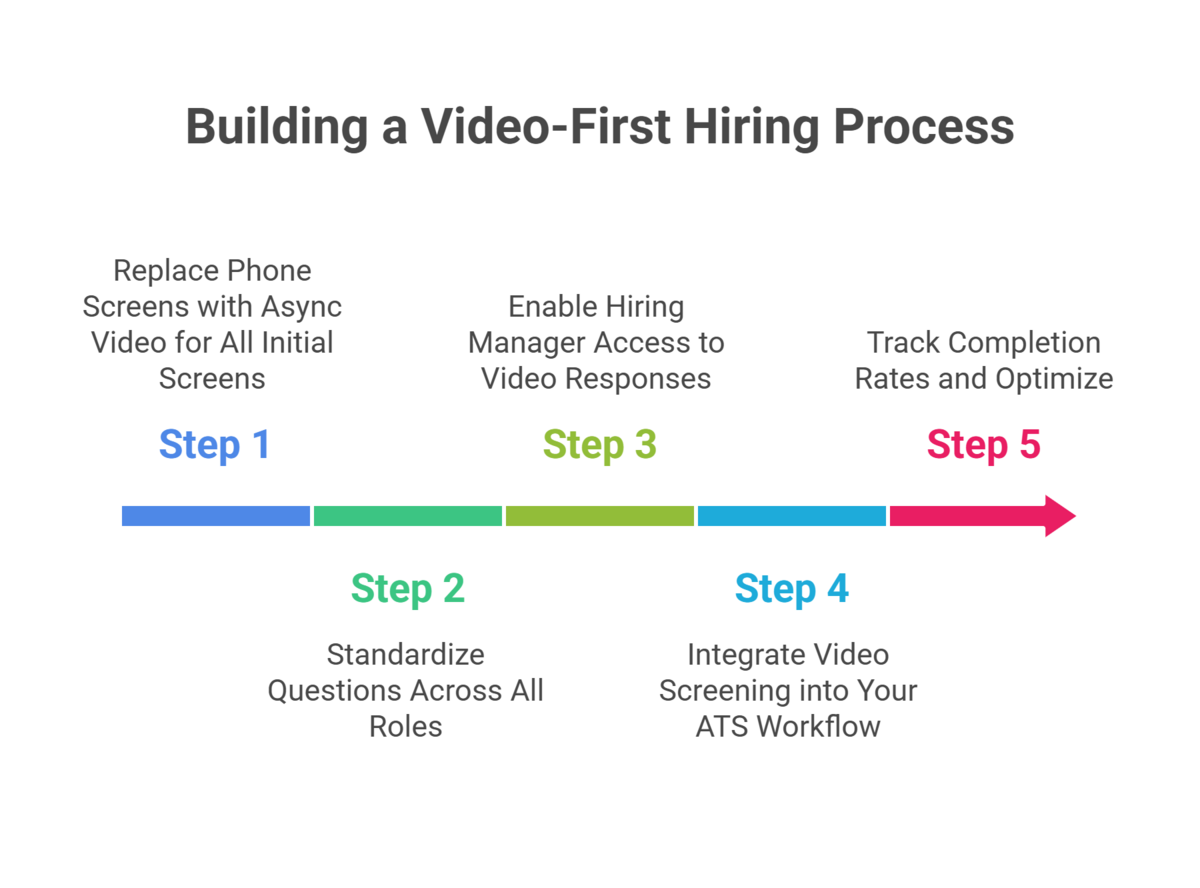
Step 1: Replace Phone Screens with Async Video for All Initial Screens
Start with the stage that benefits most: the initial recruiter screen. Define 4-6 structured questions, set a 48-72 hour response window, and send candidates a Hirevire link instead of a calendar invite. Track time savings in the first 30 days — most teams discover they've recovered 10+ hours per week.
Step 2: Standardize Questions Across All Roles
Consistent questions across similar roles allow meaningful comparisons and reduce bias. Build a question bank for common role types — customer-facing, technical, management — and use the same core questions for every candidate in a category. This makes evaluation faster and more consistent.
Step 3: Enable Hiring Manager Access to Video Responses
One of the most common inefficiencies in recruiting is the information gap between recruiter phone screens and hiring manager briefings. Sharing video response links eliminates that gap. Hiring managers form independent opinions before the debrief, which produces higher-quality evaluation conversations.
Step 4: Integrate Video Screening into Your ATS Workflow
Most cloud-based video platforms integrate with common ATS systems via Zapier or native API. Set up triggers so candidate status updates automatically when they complete a video screen, and route notifications to the right team members. This keeps pipeline data centralized without manual updates.
Step 5: Track Completion Rates and Optimize
Monitor what percentage of candidates who receive a video screen invitation actually complete it. Industry benchmarks suggest 60-80% completion rates for well-designed async screens. If your rate is lower, examine the invitation copy, question count (keep it to 4-6), and response time limit (48-72 hours is optimal for most roles).
Frequently Asked Questions
What is async video interviewing and how does it work?
Async video interviewing lets candidates record video responses to pre-set questions on their own schedule, without requiring a live interviewer present. Candidates receive a link, see the questions one at a time, record their responses, and submit. Recruiters and hiring managers review the recorded responses when convenient. There's no scheduling required on either side.
How does async video compare to live video interviews?
Live video interviews require scheduling coordination and real-time participation from both sides. Async video removes that constraint: candidates record on their own schedule, recruiters review asynchronously. Live video is still appropriate for later-stage interviews where spontaneous dialogue adds signal. Async video is more efficient for initial screening where the goal is consistent evaluation across a large pool.
What is the video interview software market growing at?
The video interview software market is growing at a 20% compound annual growth rate and is projected to reach $3.5 billion by 2030, according to Business Research Insights. The AI-powered video interview segment is projected to hold approximately 37.96% of the total online recruitment market in 2026.
Is video screening fair to candidates?
Video screening is fair when it uses structured questions applied consistently to all candidates, evaluates relevant competencies, and keeps humans in the evaluation seat. Async video without algorithmic scoring — where recruiters watch and evaluate responses directly — is generally considered fairer than AI-scored video analysis, which faces scrutiny from regulators and candidates alike.
How much does video interview software cost?
Pricing varies significantly by platform and scale. Hirevire starts at $39/month (billed annually), making async video screening accessible to SMBs and startups. Enterprise platforms with AI scoring capabilities typically run several thousand dollars per year or more. Most platforms offer free trials.
How long should async video screening questions be?
Best practice is 4-6 questions with individual response time limits of 2-3 minutes each. That gives candidates enough time to answer substantively without creating a lengthy recording process. Total candidate time investment should be 15-25 minutes for a well-designed async screen. Screens that are too long see increased drop-off rates.
Can video interviewing work for technical roles?
Yes, with appropriate question design. Technical roles benefit from structured questions that probe problem-solving approach, communication of complex topics, and situational judgment. Video screening is not a substitute for technical assessments (coding tests, case studies), but it's an effective first stage that provides signal on communication ability and cultural fit before investing in more intensive technical evaluation.
What to Watch Next
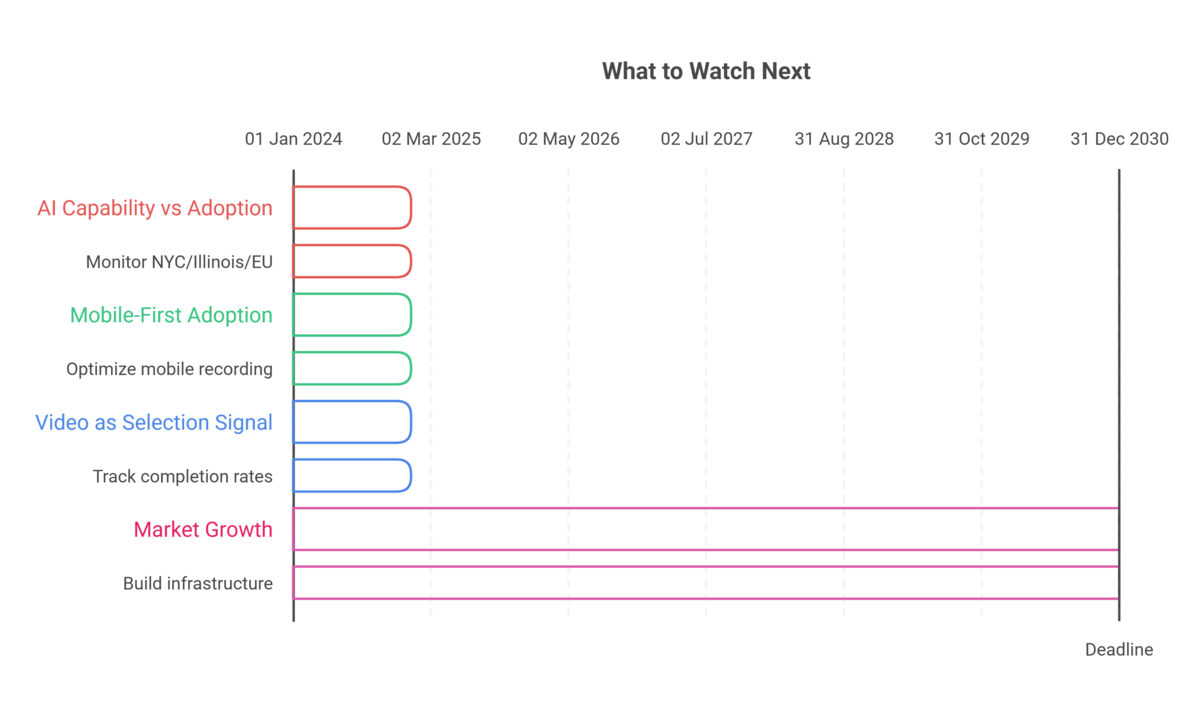
AI analysis capability versus AI analysis adoption. As AI video analysis becomes more sophisticated, the gap between what's technically possible and what's legally permissible in regulated jurisdictions will widen. Watch how NYC, Illinois, and EU enforcement actions define acceptable AI capabilities in video screening — those precedents will shape what features platform providers can offer in compliant products.
Mobile-first video screening adoption. Candidates completing video screens on mobile devices already represent a significant and growing portion of responses. Platforms that optimize for mobile recording and playback — short load times, in-browser recording without apps — will see higher completion rates as the candidate population increasingly defaults to mobile.
Video screening as a candidate selection signal. Some HR leaders are beginning to track which candidates self-select into async video processes versus abandoning them, using completion rate as a soft indicator of role engagement and initiative. As more data accumulates on the correlation between screening completion behavior and subsequent performance, expect this to become a more formal part of evaluation frameworks.
The video interviewing market at $3.5 billion by 2030 is being built right now, one async screen at a time. Teams that build these habits early will be operating the infrastructure that becomes standard practice — rather than adopting it under pressure when the gap becomes too obvious to ignore.
Conclusion
The six trends in this article point in the same direction: video is no longer an alternative to traditional hiring — it's the default. Candidates expect it. Budgets favor it. AI is accelerating it. And regulatory pressure is pushing toward the transparent, human-supervised model that async video naturally supports.
The question for recruiting teams in 2026 is not whether to adopt video hiring but how to do it in a way that captures the speed advantages, maintains candidate trust, and builds the infrastructure for where the market is heading.
Hirevire gives teams a practical starting point: async video screening that candidates can complete without accounts or app downloads, recruiters can review without scheduling, and hiring managers can evaluate together without briefings. Starting at $39/month, it's built for the teams this market shift matters most to.