How Remote Talents Eliminated Manual Screening for 100+ Candidates Using Hirevire
When a recruitment agency handles international candidates at scale, the early-stage screening problem is not a minor inconvenience. It is a structural constraint that determines how many roles you can work simultaneously, how fast you can fill them, and whether your recruiters are spending their time on high-value conversations or on scheduling and managing preliminary phone calls.
Remote Talents is a remote-first recruitment agency that works with international candidates across multiple markets. At volumes of 100+ candidates per active role, the traditional phone screen workflow was not scaling. Roy Lammers, CEO of Remote Talents, made the decision to replace the phone screen step with Hirevire's async video screening platform. This is what changed.
The business case for async video screening in high-volume agency recruitment is well-supported by the broader market data. The global recruitment process outsourcing market is expected to reach $26.4 billion by 2030, according to Grand View Research, driven by increasing demand for scalable hiring solutions across markets. Agencies handling international candidate pools face the sharpest version of the scaling challenge because they combine high volume with cross-timezone coordination - exactly the conditions that make synchronous screening most expensive.
The Challenge: Screening International Candidates at Scale
Remote Talents works with candidates across multiple time zones and markets. At the volume their agency operates, each active role generates dozens to over a hundred candidate applications. The pipeline moves fast. Clients expect shortlists quickly. The gap between when a candidate applies and when a recruiter can get them on a call was becoming a bottleneck.
For international candidates, the scheduling challenge has a specific shape. Unlike domestic hiring where a phone screen can be arranged within a day or two of application, international candidates may be in time zones that have only a two-hour overlap with the recruiter's working day. That overlap has to cover all active roles simultaneously. When a recruiter is managing five active roles with 20+ candidates each, the scheduling queue becomes an actual problem rather than an administrative inconvenience.
The traditional phone screen workflow also creates an experience issue for candidates. Long response times from initial application to first contact cause drop-off. Strong candidates with multiple options will advance further in processes where they receive faster feedback. An agency that is slow to move candidates through its own funnel loses talent to competitors who move faster.
Best practices for hiring process at the agency level increasingly recognise that early-stage screening should be fast, structured, and candidate-friendly. A process that moves candidates through asynchronously, without requiring them to wait for a scheduled call, serves both the agency's throughput needs and the candidate's experience expectations.
For international recruitment specifically, there are additional variables that synchronous screening doesn't handle well. Candidates in different markets have different conventions around interview scheduling - in some markets, immediate availability is the norm; in others, a week's notice is expected. The time cost of adapting a standardised phone screen workflow to multiple market conventions is significant. Async video sidesteps these conventions entirely: the candidate records when convenient, the recruiter reviews when convenient, and neither party has to negotiate around the other's schedule or cultural norms around availability.
Remote Talents also works with clients who need to see candidate communication quality before committing to a live interview. For roles where presentation, language skills, and professional demeanour are direct requirements, asking a client to invest time in a live interview with a candidate they've only seen on paper is a harder sell than presenting a client with a shortlist accompanied by video responses. The async screening step serves double duty: it reduces the recruiter's workload and it produces evidence that supports the client's confidence in the shortlist.
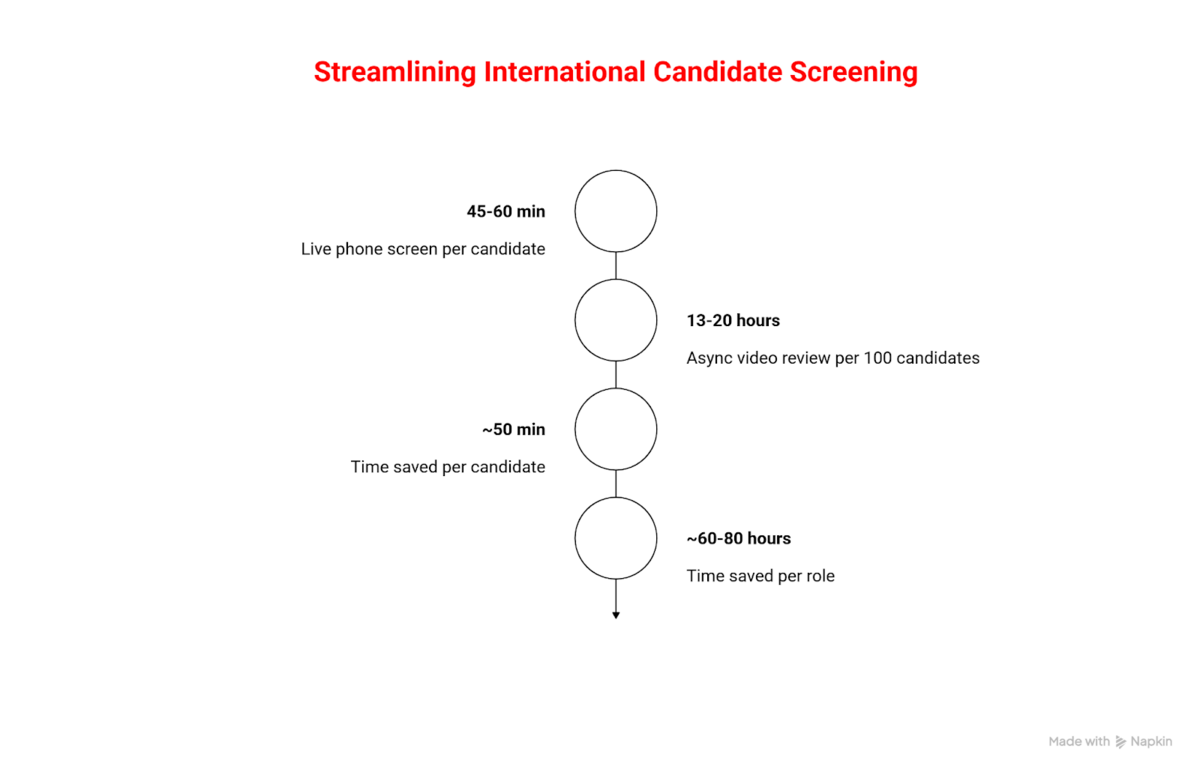
Why Manual Calls Were Unsustainable
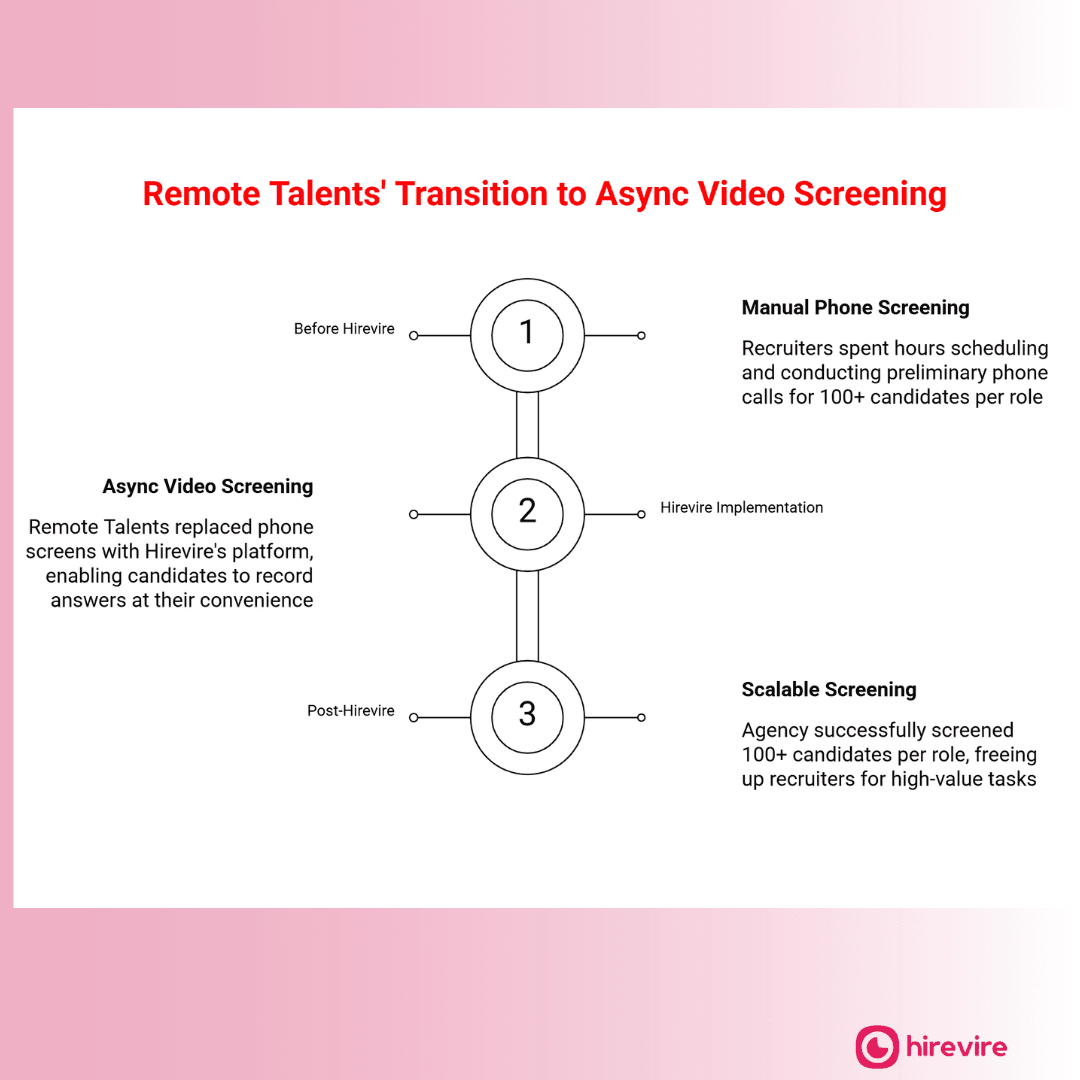
The core economics of phone screening at scale are unfavourable. At 100+ candidates per role:
| Screening Method | Time per Candidate | Total Time (100 candidates) |
|---|---|---|
| Live phone screen | 45-60 min (incl. scheduling) | 75-100 hours |
| Async video review | 8-12 min | 13-20 hours |
| Time saved | ~50 min per candidate | ~60-80 hours per role |
That 60-80 hour difference per role is not a marginal efficiency gain. For a recruiter working a standard week, it represents the difference between being able to work one role at this volume and being able to work three or four.
The hidden costs compound the direct time cost. Phone screens require both parties to be present simultaneously, which means:
- Candidates who are at work during business hours cannot take calls without risk
- International candidates in inconvenient time zones have to choose unusual hours to participate
- Recruiters block calendar time for every screen, regardless of candidate quality
- No-show rates for scheduled calls typically run at 15-25%, meaning booked time that produces nothing
For best ai recruiting tools for smarter hiring, the test is whether they reduce the per-candidate cost in the screening stage without compromising the quality of information gathered. For roles where communication is a core requirement, async video clears that test: it captures the same communication signals as a phone screen, at a fraction of the time cost, and without the synchronisation requirement.
How Hirevire Replaced the Phone Screen Workflow
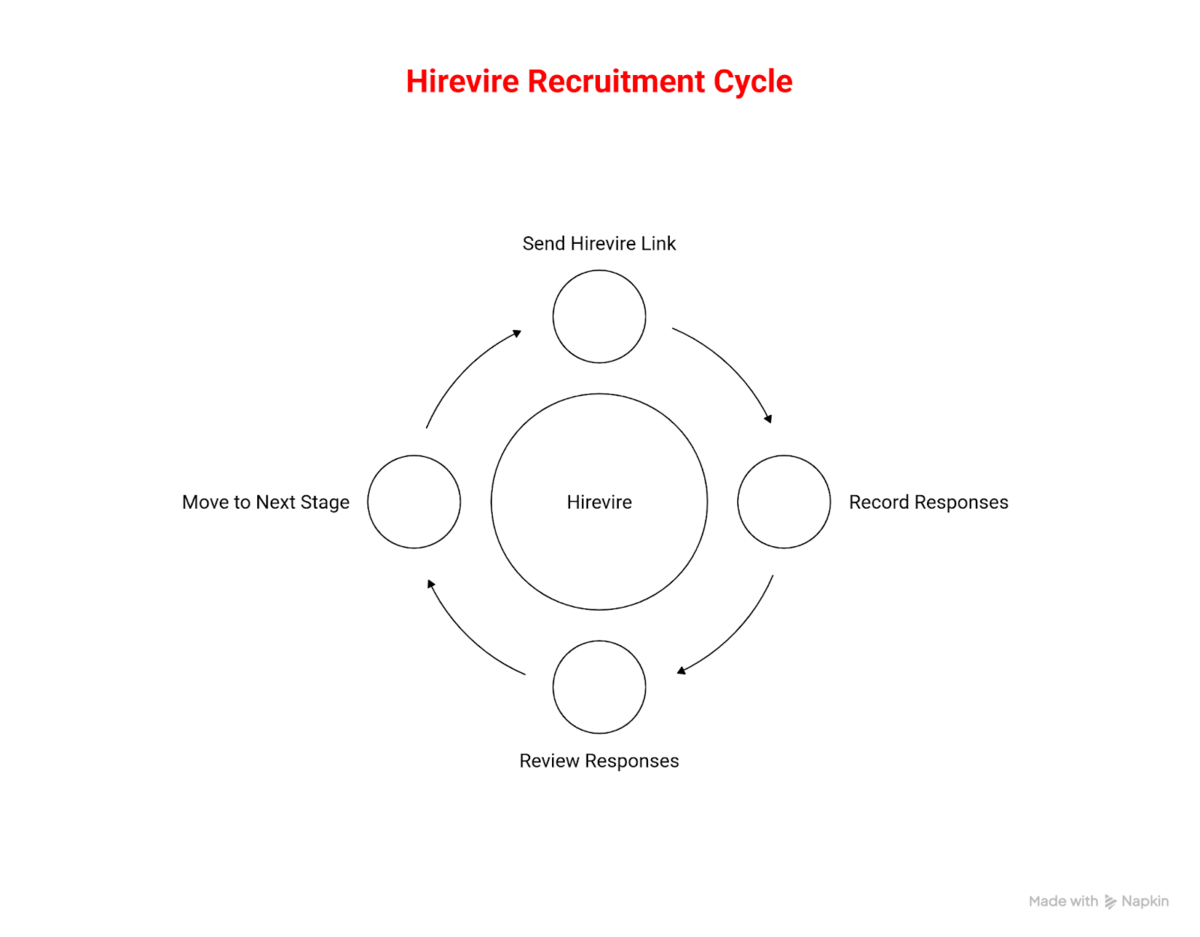
Remote Talents replaced its initial phone screen step with a structured async video screen using Hirevire. The workflow change was straightforward: instead of scheduling a call after reviewing a CV, recruiters now send candidates a Hirevire link with pre-set screening questions. Candidates record their responses on their own schedule. Recruiters review responses asynchronously and move qualified candidates to the next stage.
Roy Lammers summarises the practical experience directly:
"It saves a lot of time - otherwise we would need to interview people manually. The software always works, and it's really easy for our candidates to use."
—Roy Lammers, CEO, Remote Talents
The observation that the software "always works" is worth unpacking. For a recruitment agency, technical reliability in candidate-facing tools is not optional. A platform that crashes, produces errors on certain devices, or confuses candidates creates support overhead and damages the agency's professional image. When Hirevire is presented to a candidate as part of a structured hiring process, the candidate's experience of that tool reflects on the agency. A clean, simple, reliable experience - which Hirevire provides - signals a well-run operation.
The "easy for our candidates to use" observation addresses a specific concern agencies have about async video: candidate drop-off. If the tool requires app downloads, account creation, or complex instructions, candidates self-select out of the process, particularly candidates who are less tech-familiar or who are applying to multiple positions simultaneously. Hirevire's candidate-facing interface requires no account creation and works from a simple browser link, which keeps completion rates high.
ATS Integration: How Remote Talents Connected Hirevire to Their Stack
One of the specific factors Roy Lammers highlighted in his assessment of Hirevire was the ATS integration capability. For a recruitment agency running active pipelines across multiple clients and roles, isolated tools that don't connect to the existing system create data management overhead that erodes the efficiency gains they provide.
Hirevire integrates with major ATS platforms, allowing candidate video responses and recruiter notes to flow into the broader candidate record. For Remote Talents, this means the async screening step doesn't create a separate data silo. When a recruiter advances a candidate from the Hirevire review stage, that action and the associated data connect to the ATS record.
For agencies considering ai screening for high-volume hiring, the integration question is often the deciding factor between platforms that deliver net efficiency gains and platforms that shift work rather than reduce it. A screening tool that requires manual data entry to transfer candidate information into the ATS doesn't actually save time at the agency level - it shifts the time from one step to another. Integration closes that gap.
This capability also enables Remote Talents to maintain a consistent candidate record throughout the full hiring lifecycle, from initial application through screening, shortlisting, and placement. The video response becomes part of the candidate's permanent record, accessible to the client during the presentation stage if relevant.
Results: What Changed After Switching
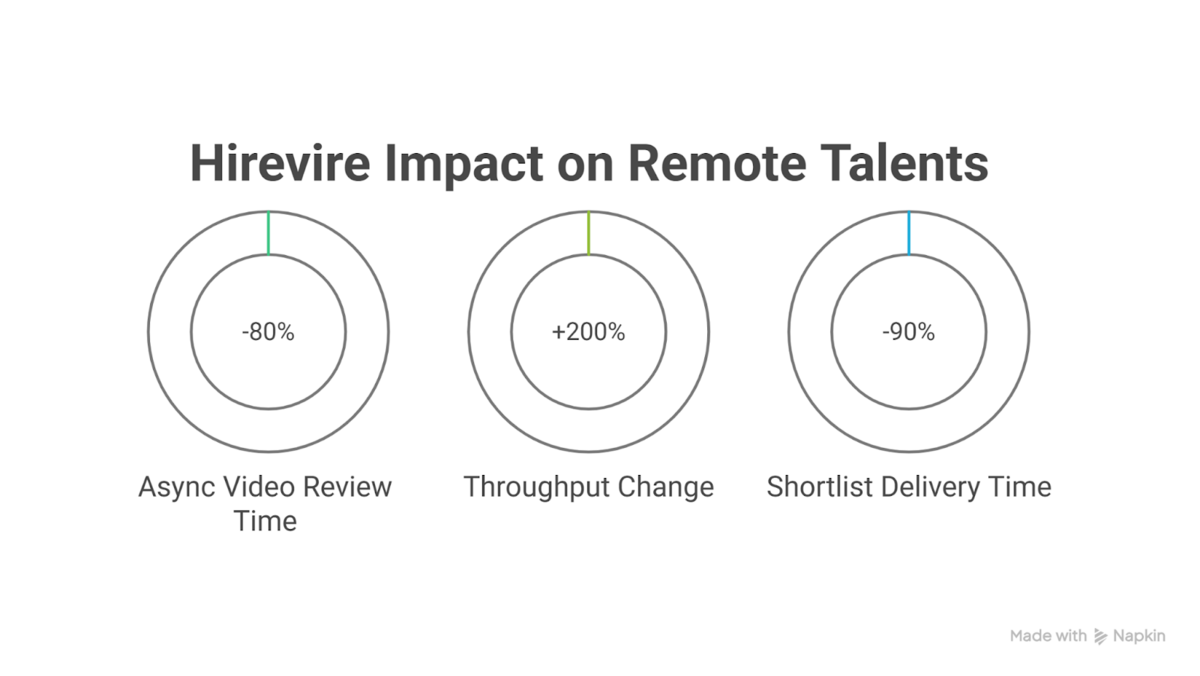
The operational outcome for Remote Talents after switching to Hirevire was a material reduction in the time recruiters spent on early-stage screening for high-volume roles. Replacing the 45-60 minute phone screen with an 8-12 minute async video review at 100+ candidate volumes represents the kind of throughput change that allows an agency to handle significantly more concurrent roles with the same team.
Beyond raw throughput, the switch changed the nature of recruiter work at the early screening stage. Reviewing video responses in batches - watching five, ten, or fifteen candidates in a focused sitting rather than spreading individual calls across the week - allows for more consistent, comparative assessment. A recruiter who has watched fifteen video responses in one sitting can compare candidates against each other more accurately than one who conducted calls spread over two weeks of scheduling.
The approach to reduce time-to-hire with AI isn't about replacing human judgment in the screening process. It's about removing the synchronisation overhead that slows down human judgment from being applied. When recruiters can review candidates faster, they can move strong candidates to the next stage faster. Faster progression through the funnel means a faster offer for the best candidates, and a better conversion rate on top talent that might otherwise accept a competing offer.
For clients of Remote Talents, the practical improvement shows up as faster shortlist delivery. When the agency can complete initial screening on a 100-candidate pool in two to three days rather than two to three weeks, the client sees a shortlist sooner and can begin live interviews with qualified candidates while the market is still right for those specific candidates.
What Roy Lammers Says
"It's really intuitive. People have an easy time recording their audios and videos."
Roy Lammers, CEO, Remote Talents (watch the full interview)
The condensed summary from Roy Lammers covers the three elements that matter most to an agency evaluating a screening tool:
Time savings: "It saves a lot of time - otherwise we would need to interview people manually." The comparison point is the pre-Hirevire workflow: manual phone screens with every candidate who made it past the CV review. That workflow was sustainable at low volumes. At 100+ candidates per role, it was not.
Reliability: "The software always works." For a B2B tool used in a candidate-facing process, this is not a trivial observation. Downtime, bugs, and confusing errors create support requests, damage candidate experience, and reflect poorly on the agency's operational quality. The consistent reliability of Hirevire removes a category of operational risk that comes with using any new technology in a live hiring process.
Candidate experience: "It's really easy for our candidates to use." Candidate experience in the screening step affects candidate conversion rates, agency reputation, and the quality of talent that completes the process. A tool that candidates find simple and clear to use ensures that drop-off at the screening stage is based on candidate quality, not candidate frustration with the tool.
These three elements - time, reliability, and candidate experience - represent the full evaluation criteria for a screening tool at the agency level. Hirevire delivers on all three.
Is Hirevire Right for Your Agency's Hiring Volume?
The Remote Talents case applies most directly to agencies and in-house recruiting teams that face the combination of high candidate volume and cross-timezone coordination. But the underlying economics apply at lower volumes too.
Any recruiting workflow where phone screens represent a significant time cost relative to the number of positions being worked is a candidate for async video screening. The relevant question is not "do we have 100+ candidates per role?" but "is early-stage screening eating a disproportionate share of our recruiter time?"
For agencies that use the best practices for hiring process recommended by HR analytics firms, async video screening is increasingly positioned as a standard tool rather than a niche innovation. The time savings are well-documented. The candidate experience data consistently shows that clear, simple async processes have comparable completion rates to phone screens when implemented well.
Hirevire offers plans suited to agency operations: the Essentials plan at $49/month ($39/month billed annually), the Professional plan at $149/month ($99/month billed annually), and the Agency plan at $249/month ($199/month billed annually), which is designed for teams managing multiple clients and roles simultaneously.
For more on high-volume hiring strategies, see the high-volume hiring comprehensive guide. To compare AI screening tools, see the AI candidate screening software comparison. For async video tool comparisons specifically, the one-way video screening tools guide covers the leading platforms in detail.
FAQs: Async Video Screening for Recruitment Agencies
What is the ROI of async video screening for high-volume hiring?
At 100 candidates per role, replacing phone screens with async video review saves approximately 60-80 recruiter hours per role. For an agency billing on time-based models, or simply managing recruiter capacity across concurrent active roles, this is a substantial efficiency improvement.
How does Hirevire handle candidates who are not comfortable with video?
Hirevire is designed for ease of use. Candidates access it via a browser link, with no app download or account creation required. The interface walks candidates through the recording process clearly. Completion rates are consistently high because the experience is straightforward.
Does Hirevire integrate with existing ATS platforms?
Yes. Hirevire integrates with major ATS platforms, allowing candidate video responses and recruiter notes to connect to the candidate record in your existing system. This prevents the tool from creating a data silo.
How does ai screening for high-volume hiring compare to traditional screening in terms of candidate quality?
The available data suggests that async video screening captures equivalent communication quality signals to phone screens for roles where communication is a primary assessment criterion. The format (video response to structured questions) is also more standardised than live phone screens, which vary in length and structure depending on interviewer behaviour.
What types of roles is async video screening most suited to?
Roles where early-stage assessment is primarily about communication quality, availability, and basic fit rather than technical skill. VA roles, customer-facing positions, administrative roles, and many agency placements for professional services are well-suited. Technical roles requiring live problem-solving assessment may need a different approach for the screening stage.
How does Hirevire help agencies reduce time-to-hire for critical roles?
By removing the scheduling coordination from the early screening stage, Hirevire allows agencies to complete initial screening within 24-48 hours of candidate application rather than the 5-10 day window that phone screen scheduling typically requires. Faster initial screening means faster shortlist delivery to clients and faster offer timelines for top candidates. Learn more about how AI reduces time-to-hire.
Conclusion
Remote Talents' experience with Hirevire demonstrates what happens when the screening method matches the operational reality of an agency doing high-volume international recruitment.
Roy Lammers was not looking to reduce the rigour of the screening process. He was looking for a way to apply rigour at a volume that manual phone screens could not sustain. Async video screening with Hirevire solved that problem: it preserved the ability to assess candidate communication quality before any live interview, while removing the synchronisation overhead that was capping how many candidates the team could evaluate.
The result was a screening step that now scales with candidate volume rather than being bottlenecked by recruiter calendar availability. For any recruitment agency or in-house team facing similar volume constraints, it represents a structural improvement to how early-stage hiring works.
For agencies looking to compare AI screening tools or review the full landscape of one-way video screening platforms, the Remote Talents case provides useful grounding: the technology works best when it replaces a step that was already a bottleneck, rather than being added to a process that didn't need it. The phone screen, in high-volume international recruitment, was exactly that bottleneck. Removing it - and replacing it with a faster, more scalable async alternative - is where the efficiency gains come from.