Reduce Time To Hire With AI : Tools, Strategies and Complete Implementation Guide 2026
The hiring landscape has fundamentally changed. What used to take 36-42 days now needs to happen in 20 days or less to remain competitive. Top candidates receive multiple offers within a week, and delayed hiring processes directly translate to lost talent and revenue.
According to LinkedIn's Global Talent Trends report, 73% of talent professionals say recruiting is becoming more strategic and data-driven, with AI and automation adoption increasing by 67% in the past two years. Organizations implementing AI-powered screening report 50-75% reductions in time-to-hire while simultaneously improving candidate quality and experience.
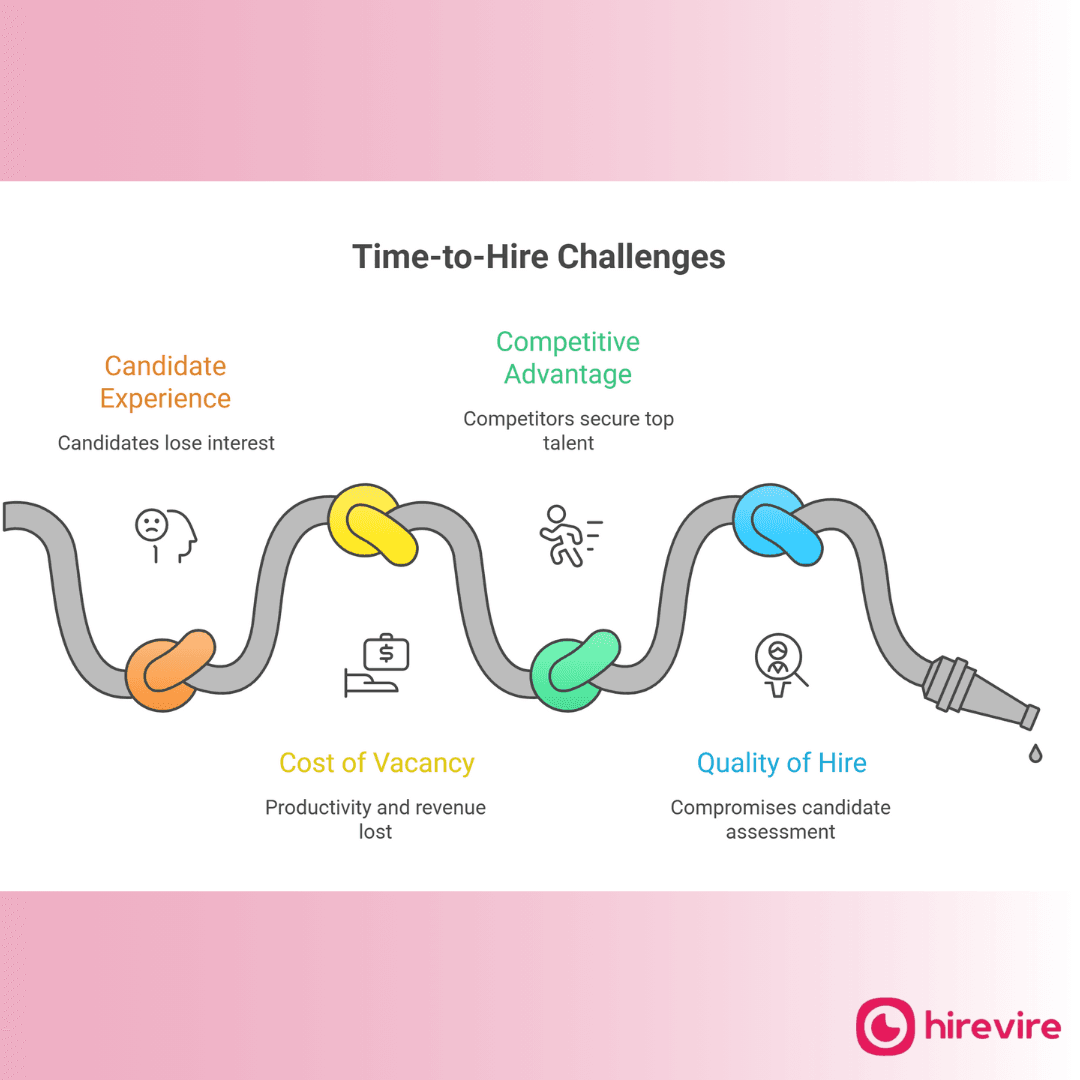
The cost of slow hiring extends beyond lost candidates. Extended vacancies reduce team productivity, delay critical projects, increase recruiter workload, and damage employer brand as candidates share negative experiences. For technical roles and senior positions, every additional week of vacancy can cost organizations $5,000-15,000 in lost productivity and opportunity costs.
Quick Summary: This guide provides a comprehensive framework for reducing time-to-hire using AI-powered tools and automation strategies. Organizations can achieve 50-75% time-to-hire reductions by implementing asynchronous AI screening, eliminating scheduling bottlenecks, and automating repetitive tasks. Hirevire provides AI-powered asynchronous interview capabilities enabling organizations to screen candidates 24/7 without scheduling delays, with customers reporting 75% time savings on initial screening.
Table of Contents
- What is Time-to-Hire?
- Why Reducing Time-to-Hire Matters
- Traditional Hiring Bottlenecks
- How AI Transforms Time-to-Hire
- AI Tools That Reduce Time-to-Hire
- Proven Strategies to Reduce Time-to-Hire
- Real-World Case Studies
- Implementation Guide
- Best Practices for Sustained Improvement
- Frequently Asked Questions
- Conclusion
What is Time-to-Hire?
Time-to-hire measures the number of days between when a candidate enters the hiring pipeline (typically application submission or initial contact) and when they accept the job offer. This metric differs from time-to-fill, which measures from job posting creation to offer acceptance.
Core Time-to-Hire Components
Application to Initial Screen - The period from candidate application submission to first review or contact. Traditional manual resume review can take 3-7 days depending on application volume. AI-powered screening reduces this to hours or minutes.
Initial Screen to First Interview - Scheduling coordination for phone screens typically adds 5-10 days in traditional processes due to back-and-forth calendar coordination, time zone challenges, and limited interviewer availability. Asynchronous screening eliminates this bottleneck entirely.
Interview Rounds - Multiple interview stages (phone screen, technical assessment, panel interviews, final round) typically span 14-21 days in traditional processes. Each round requires scheduling coordination, candidate and interviewer availability alignment, and evaluation time between stages.
Decision and Offer - Internal deliberation, approval processes, offer letter creation, and negotiation typically add 3-7 days after final interviews. Delays in this stage often result from decision-maker availability, budget approvals, and administrative processes.
Why Time-to-Hire Varies
Time-to-hire varies significantly by role complexity, seniority level, industry, geographic location, and organization size. Entry-level positions average 20-30 days, mid-level roles 30-40 days, senior positions 40-60 days, and executive hires 60-90+ days. Technical roles, specialized positions, and competitive markets typically require faster processes to secure top candidates.
Why Reducing Time-to-Hire Matters
Candidate Experience and Offer Acceptance
Top candidates receive multiple offers within 7-14 days of beginning their search. According to industry research, 57% of candidates lose interest in positions when hiring processes exceed three weeks. Extended timelines directly correlate with offer rejection rates, with each additional week of process length increasing rejection likelihood by 15-20%.
Candidate expectations have shifted dramatically. Professionals accustomed to instant communication, same-day deliveries, and immediate responses expect hiring processes reflecting similar efficiency. Organizations with 14-day time-to-hire achieve 40-50% higher offer acceptance rates compared to those with 35+ day processes.
Cost of Vacancy
Every day a position remains vacant costs organizations productivity, revenue, and team morale. For a role with $80,000 annual salary, each week of vacancy costs approximately $1,500 in lost productivity assuming 100% productivity contribution. Senior roles and revenue-generating positions multiply these costs significantly.
Extended vacancies overburden existing team members, delay strategic initiatives, reduce service quality, and create burnout risks. The longer positions remain open, the more institutional knowledge gap grows, particularly for succession planning and critical function roles.
Competitive Advantage in Talent Markets
Organizations with streamlined hiring processes gain significant competitive advantages in tight talent markets. Fast-moving companies secure top candidates before competitors complete initial screens. This speed advantage compounds over time, building stronger teams that further improve organizational performance.
Healthcare organizations face particularly acute time-to-hire pressures. Nursing and clinical staff shortages require rapid hiring to maintain patient care quality and regulatory compliance. Organizations reducing time-to-hire for nurses from 45 days to 15 days dramatically improve staffing adequacy and reduce expensive agency staffing costs.
Quality of Hire Correlation
Contrary to assumptions that faster hiring compromises quality, research demonstrates that structured, efficient processes improve quality of hire. Lengthy processes typically indicate bottlenecks, inconsistent evaluation, and decision-making delays rather than thorough assessment.
AI-powered assessment enables comprehensive evaluation in compressed timelines. Organizations can assess more candidate dimensions (technical skills, cultural fit, behavioral competencies, communication abilities) in less time through asynchronous multi-format evaluation than traditional sequential interview processes allow.
Traditional Hiring Bottlenecks
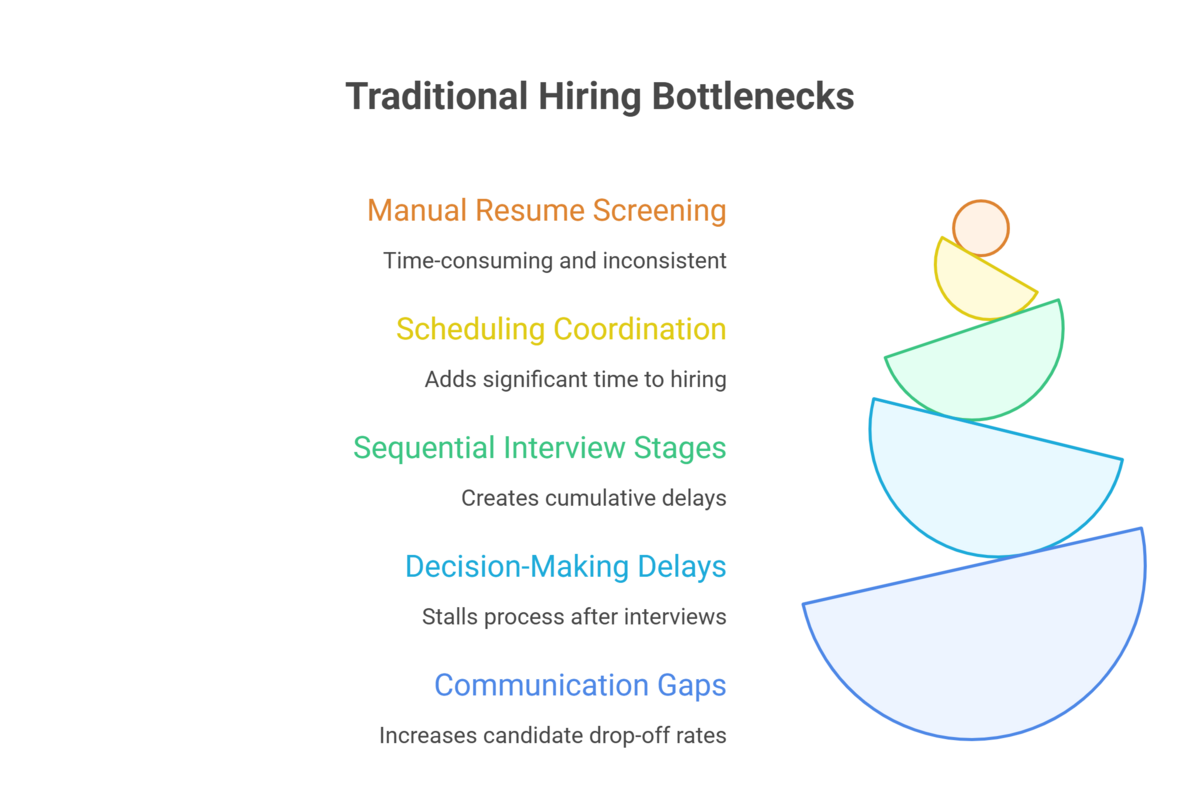
Manual Resume Screening
Traditional manual resume review creates significant time-to-hire delays. Recruiters spend 20-30 minutes per resume for thorough evaluation, processing 20-30 resumes daily. For roles attracting 100-300 applications, initial screening requires 3-7 full working days.
Manual screening introduces consistency challenges. Evaluator fatigue, varying standards between reviewers, unconscious bias, and time pressures compromise thoroughness. Morning-reviewed candidates often receive more generous assessment than those reviewed late afternoon when decision fatigue peaks.
Scheduling Coordination Bottlenecks
Interview scheduling represents one of the largest time-to-hire bottlenecks in traditional processes. Coordinating availability between candidates and 3-5 interviewers across phone screens, technical assessments, and panel interviews typically adds 15-25 days to hiring timelines.
Each scheduling round involves email exchanges, calendar checks, time zone coordination, rescheduling for conflicts, and back-up planning for cancellations. For panel interviews requiring 4-6 participants, finding mutually available 60-minute blocks often extends 2-3 weeks into the future.
Sequential Interview Stages
Traditional sequential interview processes create cumulative delays. Phone screen (5-7 days to schedule), technical assessment (7-10 days to schedule), hiring manager interview (7-10 days to schedule), and final panel (10-14 days to schedule) compound to 30-40+ days before decision-making even begins.
Sequential designs prevent parallel processing and create idle waiting periods. Candidates spend 80% of traditional hiring process time waiting for next steps rather than actively being evaluated.
Decision-Making Delays
After final interviews complete, traditional processes often stall during decision-making phases. Gathering feedback from multiple interviewers, achieving consensus, obtaining approval from senior leadership, navigating budget authorization, and creating offer letters add 5-10 days when executed serially.
Communication Gaps
Inadequate candidate communication throughout processes creates negative experiences and increases drop-off rates. Candidates receiving updates every 7-10 days feel deprioritized and continue exploring other opportunities actively, resulting in 25-40% increased offer rejection rates.
How AI Transforms Time-to-Hire
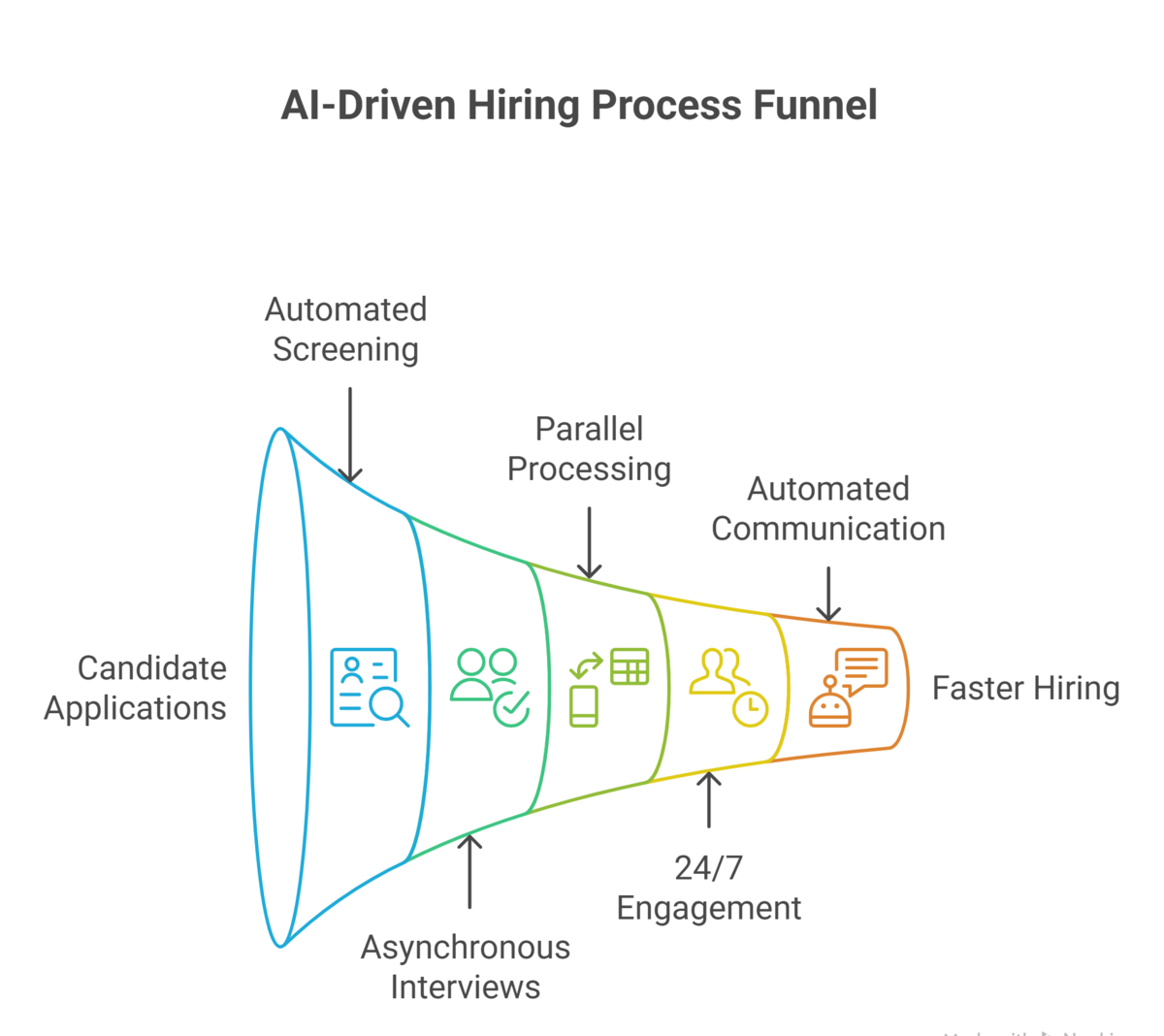
Automated Initial Screening
AI-powered resume screening processes hundreds of applications in minutes rather than days. Natural language processing evaluates candidate qualifications, experience relevance, and skill matches against job requirements instantly, prioritizing top candidates for immediate human review.
Hirevire's AI-powered asynchronous interview platform eliminates initial screening bottlenecks entirely by enabling candidates to submit video, audio, text, and file responses immediately upon application. AI transcription in 90+ languages and automated scoring provide instant candidate evaluation without recruiter involvement in initial stages.
Asynchronous Assessment Eliminates Scheduling
Asynchronous interview platforms fundamentally transform time-to-hire by removing scheduling as a constraint. Candidates complete assessments at their convenience 24/7, eliminating the 5-10 day scheduling delays for each interview round.
With Hirevire, candidates receive interview links immediately upon application and can submit responses within hours rather than waiting weeks for scheduled phone screens. Recruiters review responses asynchronously at scale, evaluating 20-30 candidates in the time traditional processes require for 3-5 scheduled interviews.
Parallel Processing vs. Sequential Stages
AI-powered platforms enable parallel candidate evaluation rather than sequential progression. Multiple assessments (behavioral questions, technical challenges, work samples, communication evaluation) occur simultaneously through multi-format asynchronous responses instead of across separate scheduled interview rounds.
24/7 Candidate Engagement
Asynchronous AI platforms eliminate time zone barriers and work-hour constraints. International candidates, passive candidates employed full-time, and candidates in different time zones participate without scheduling complexity. This accessibility expands talent pools while accelerating process timelines.
Automated Communication and Workflows
AI-powered recruitment automation handles candidate communications, status updates, next-step notifications, and rejection emails automatically based on workflow triggers. Candidates receive immediate acknowledgment, regular updates, and consistent communication without manual recruiter intervention.
Hirevire automates bulk candidate invitations, assessment reminder emails, and shortlist/rejection notifications, ensuring candidates receive timely communication while reducing recruiter administrative burden by 60-70%.
Data-Driven Bottleneck Identification
AI-powered recruitment analytics identify specific process bottlenecks quantitatively. Organizations track average time-in-stage for each hiring phase, pinpoint where delays occur, and implement targeted improvements based on data rather than assumptions.
AI Tools That Reduce Time-to-Hire
Hirevire - AI-Powered Asynchronous Screening
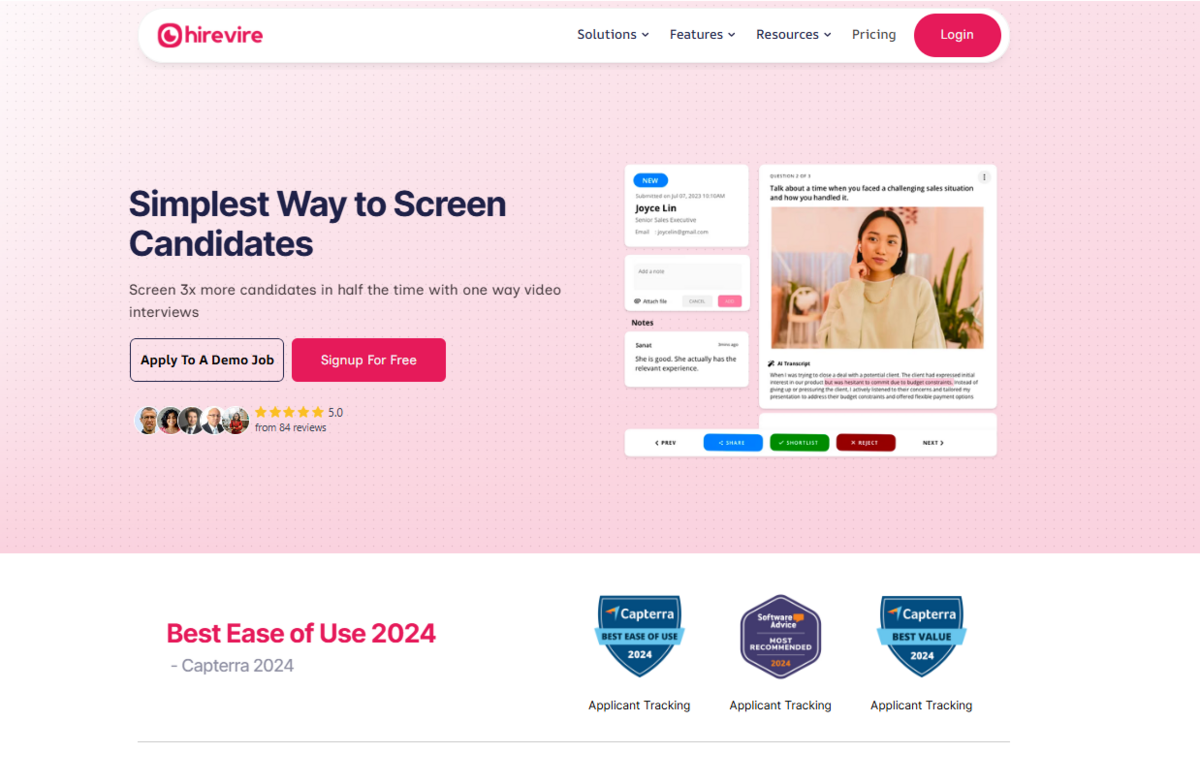
Hirevire provides comprehensive AI-powered asynchronous interview capabilities designed specifically to eliminate time-to-hire bottlenecks while improving candidate experience and quality of hire.
How Hirevire Reduces Time-to-Hire:
Immediate Candidate Assessment - Candidates receive interview links instantly upon application and submit responses at their convenience, eliminating 5-10 day scheduling delays. Organizations begin evaluating candidates within hours of application rather than weeks.
Multi-Format Evaluation - Video, audio, text, and file response options enable comprehensive assessment in a single asynchronous session rather than across multiple scheduled interview rounds. Behavioral questions, technical challenges, work samples, and communication assessment occur simultaneously.
AI Transcription and Scoring - AI-powered transcripts in 90+ languages enable rapid candidate review. Automated scoring and matching algorithms prioritize top candidates instantly, reducing manual screening time by 75%.
Bulk Processing - Evaluate 20-30 candidates simultaneously in the time traditional processes require for 3-5 sequential phone screens. Parallel processing dramatically compresses screening timelines from weeks to days.
No-Login Candidate Experience - Candidates access assessments via simple links without account creation, eliminating the 20-25% drop-off from registration friction. Higher completion rates accelerate funnel progression.
Automated Workflows - Bulk invitations, reminder emails, and automated shortlist/rejection notifications maintain candidate communication without manual intervention, saving 60-70% administrative time.
Integration Ecosystem - 5000+ app connections via Zapier, Make, and Integrately enable seamless workflow automation with existing ATS platforms, eliminating manual data entry and process delays.
Pricing: $39-199/month with fixed interview allocations (300-12,000/year) and no per-interview fees.
Customer Impact: Organizations using Hirevire report 75% time savings on initial screening, 50-60% overall time-to-hire reductions, and 20-25% improvement in candidate completion rates.
Applicant Tracking Systems with AI Matching
Modern ATS platforms incorporating AI-powered candidate matching reduce resume screening time by automatically scoring and ranking applicants against job requirements. Greenhouse, Lever, and Workable offer AI matching capabilities that prioritize top candidates for immediate review.
These platforms reduce initial screening from days to hours but typically still require scheduled synchronous interviews for in-depth assessment, limiting overall time-to-hire impact compared to fully asynchronous solutions.
AI Scheduling Assistants
Tools like Paradox.ai's Olivia chatbot automate interview scheduling through conversational AI, reducing back-and-forth coordination time. However, scheduling automation still operates within synchronous interview constraints, providing incremental improvements rather than fundamental transformation.
Skills Assessment Platforms
TestGorilla, HackerRank, and Codility provide automated technical assessment reducing time-to-evaluate technical skills. Candidates complete assessments asynchronously on-demand, and automated grading provides instant results. These platforms work well for technical validation but typically require additional behavioral interview tools for comprehensive evaluation.
Reference Check Automation
Platforms like Checkster and SkillSurvey automate reference checking through online questionnaires, reducing reference validation from 5-7 days to 24-48 hours. Automated reference checking eliminates phone tag and scheduling delays while providing more comprehensive feedback than traditional calls.
Proven Strategies to Reduce Time-to-Hire
Strategy 1: Implement Asynchronous Initial Screening
Replace synchronous phone screens with asynchronous video assessment using platforms like Hirevire. This single change eliminates 7-14 days of scheduling coordination and enables 24/7 candidate participation.
Implementation: Create standardized screening questions covering role requirements, cultural fit, and key competencies. Deploy via asynchronous platform immediately upon application. Review responses in batches, evaluating 20-30 candidates in 2-3 hours rather than across weeks of scheduled calls.
Impact: 50-70% reduction in screening phase duration, improved candidate experience, higher completion rates, and better evaluation consistency through standardized assessment.
Strategy 2: Compress Interview Rounds Through Multi-Format Assessment
Consolidate multiple interview rounds into comprehensive asynchronous assessments combining behavioral questions, technical challenges, work sample requests, and communication evaluation in single interactions.
Rather than separate phone screen (behavioral), technical interview (coding), and panel interview (culture fit), use Hirevire's multi-format capabilities to assess all dimensions asynchronously simultaneously.
Impact: Reduces 3-4 interview rounds (spanning 20-30 days) to 1-2 asynchronous assessments (spanning 3-7 days) with equal or better evaluation depth.
Strategy 3: Parallel Process Multiple Candidates
Leverage asynchronous platforms to evaluate candidates in parallel rather than sequentially. Instead of screening candidates one-by-one through scheduled interviews, invite entire applicant pools to asynchronous assessment simultaneously and review in batches.
Impact: Compresses weeks of sequential processing into days of parallel evaluation, accelerates top-of-funnel throughput, and maintains consistent evaluation standards across all candidates.
Strategy 4: Automate Candidate Communication
Implement automated workflows for acknowledgment emails, status updates, next-step notifications, and rejection communications. Candidates receiving regular updates maintain engagement and progress through funnels faster.
Hirevire's automated bulk invitations and status notifications ensure consistent candidate communication without manual recruiter intervention, improving experience while reducing administrative burden.
Impact: 60-70% reduction in recruiter administrative time, improved candidate satisfaction scores, reduced drop-off rates, and faster funnel progression.
Strategy 5: Optimize Decision-Making Processes
Streamline post-interview decision-making through structured evaluation frameworks, collaborative review platforms, and delegated approval authority. Replace serial approval chains with parallel review and clear decision criteria.
Use Hirevire's collaborative rating and comment features to gather team feedback asynchronously rather than scheduling consensus meetings.
Impact: Reduces decision phase from 7-10 days to 2-3 days, improves hiring manager accountability, and decreases offer rejection from delays.
Strategy 6: Eliminate Candidate Login Requirements
Remove unnecessary friction from candidate experience by eliminating account creation requirements. Hirevire's no-login assessment access increases completion rates by 20-25%, accelerating funnel progression and reducing top-of-funnel leakage.
Impact: Higher assessment completion rates, faster funnel velocity, improved candidate experience, and expanded diverse candidate participation.
Strategy 7: Leverage AI for Global Hiring
Use AI transcription and translation capabilities to assess global candidates without language barriers or time zone coordination challenges. Hirevire's 90+ language AI transcription enables asynchronous global hiring at scale.
Impact: Expands talent pools internationally, eliminates time zone scheduling complexity, enables 24/7 assessment participation, and reduces international hiring timelines by 40-60%.
Strategy 8: Implement Recruitment Analytics
Track time-in-stage metrics for each hiring phase to identify specific bottlenecks quantitatively. Measure days-in-sourcing, days-in-screening, days-in-interview, and days-in-decision separately to pinpoint improvement opportunities.
Impact: Data-driven bottleneck identification enables targeted process improvements, measurable optimization tracking, and accountability for timeline commitments.
Real-World Case Studies
Unilever: 75% Time-to-Hire Reduction Through AI Video Screening
Unilever, the global consumer goods company, transformed its graduate recruitment process using AI-powered video interviewing and assessment, achieving remarkable time-to-hire improvements while dramatically scaling hiring capacity.
The Challenge: Unilever received 250,000+ graduate applications annually for 800 positions, creating unsustainable manual screening burden. Traditional processes required 4-6 months from application to offer, causing top candidates to accept competing offers before Unilever completed evaluation.
The Solution: Unilever implemented asynchronous AI-powered video assessment as the initial screening stage, replacing traditional CV screening and phone interviews. Candidates completed standardized video questions at their convenience, and AI algorithms analyzed responses for personality traits, cognitive abilities, and role fit.
The Results:
- 75% reduction in time-to-hire - Process compressed from 4-6 months to 2-4 weeks
- 16 hours saved per recruiter per hire through automation
- Improved diversity outcomes - Anonymous initial screening reduced bias
- Enhanced candidate experience - 94% of candidates rated the process positively
- Scaled capacity - Evaluated 250,000 candidates with existing recruiting team
Unilever's transformation demonstrates how asynchronous AI assessment eliminates scheduling bottlenecks, enables parallel processing at scale, and dramatically accelerates hiring timelines while maintaining or improving quality and candidate experience.
Read more about how AI is changing recruitment for additional transformation case studies.
Healthcare: Reducing Homecare Staff Time-to-Hire by 60%
A healthcare organization specializing in home care services faced critical staffing shortages impacting patient care quality and regulatory compliance. Traditional hiring processes taking 35-45 days for nursing and caregiver positions proved too slow for urgent staffing needs.
The Challenge: High-volume hiring needs (20-30 positions monthly), scheduling coordination difficulties with shift-working candidates, time zone complexities across multiple service regions, and rapid time-to-hire requirements for critical patient care coverage.
The Solution: Implementation of Hirevire's asynchronous video assessment platform for initial screening, enabling candidates to complete interviews at their convenience without scheduling coordination. Multi-format responses (video for behavioral assessment, file uploads for certifications, text for availability details) provided comprehensive evaluation asynchronously.
The Results:
- 60% reduction in time-to-hire - Process compressed from 35-45 days to 14-18 days
- Eliminated scheduling bottlenecks - Shift-working candidates participated at their convenience
- Improved candidate completion rates - 85% completion vs. 60% for scheduled phone screens
- Higher quality of hire - Standardized assessment improved evaluation consistency
- Reduced recruiter burden - 70% less administrative coordination time
The healthcare case demonstrates particular relevance for high-volume, geographically distributed, and urgency-driven hiring contexts where scheduling coordination creates unacceptable delays.
Read the complete medical recruitment with AI interview tools case study for detailed implementation insights.
Key Case Study Insights
Both case studies highlight common patterns in successful time-to-hire reduction:
Asynchronous Assessment - Eliminating scheduling coordination provides 40-60% of total time savings
Parallel Processing - Evaluating candidates simultaneously rather than sequentially compresses timelines dramatically
Standardization - Consistent structured evaluation improves both speed and quality
Candidate Experience - Convenient, accessible processes improve completion rates and funnel velocity
Automation - Reducing manual administrative tasks frees recruiters for high-value evaluation activities
Implementation Guide: Reducing Time-to-Hire with AI
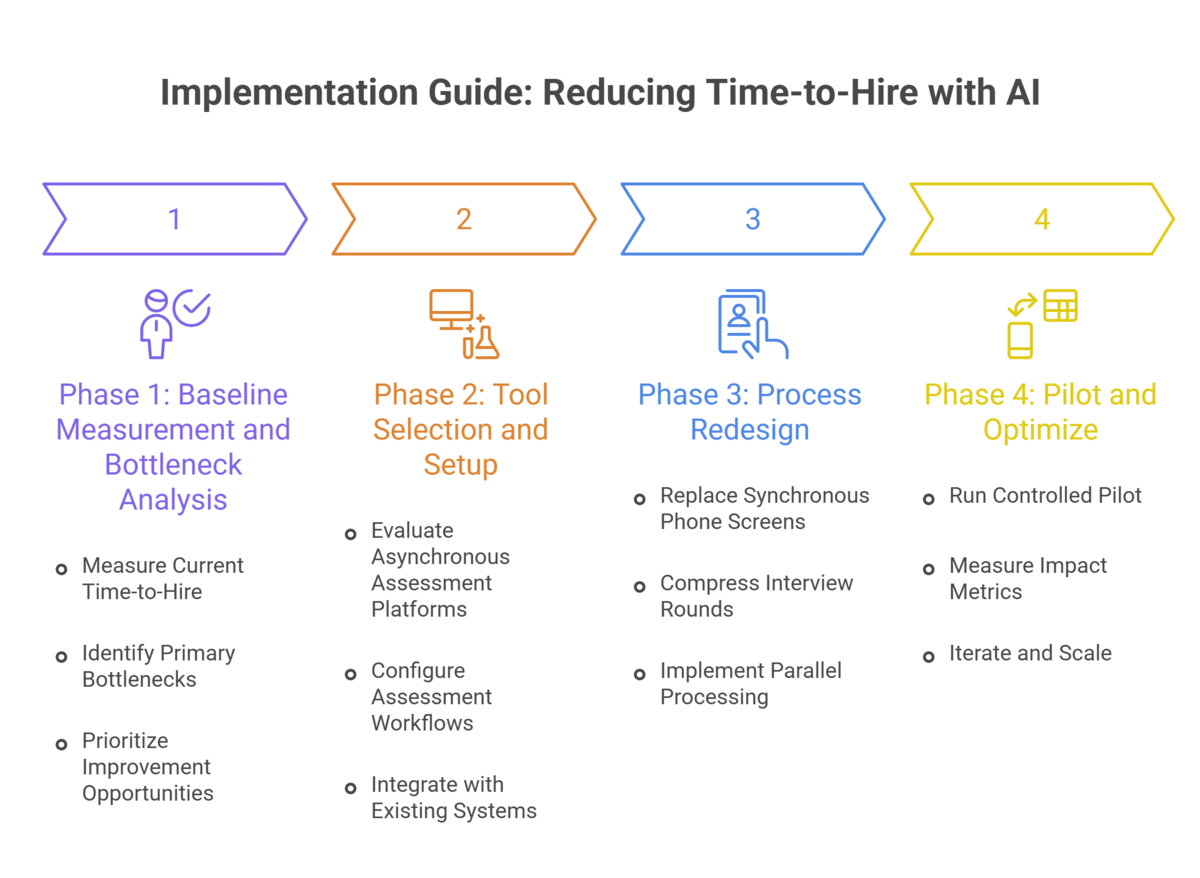
Phase 1: Baseline Measurement and Bottleneck Analysis
Step 1: Measure Current Time-to-Hire
Calculate average days from application to offer acceptance across recent hires. Segment by role type, seniority level, and department to identify variation patterns.
Track time-in-stage metrics:
- Days from application to initial screen
- Days from screen to first interview
- Days from first interview to final interview
- Days from final interview to offer
- Days from offer to acceptance
Step 2: Identify Primary Bottlenecks
Analyze which stages consume most time and where delays concentrate. Common bottlenecks include initial resume screening (recruiter availability), scheduling coordination (calendar complexity), decision-making (consensus challenges), and offer approval (authorization chains).
Survey recruiters and hiring managers about process pain points to identify qualitative friction beyond quantitative metrics.
Step 3: Prioritize Improvement Opportunities
Rank bottlenecks by impact potential and implementation ease. Initial screening automation and asynchronous assessment typically provide highest ROI with fastest implementation.
Phase 2: Tool Selection and Setup
Step 1: Evaluate Asynchronous Assessment Platforms
Compare platforms based on:
- Multi-format support (video, audio, text, files)
- AI capabilities (transcription, scoring, matching)
- Integration ecosystem with existing ATS
- Candidate experience (login requirements, mobile optimization)
- Pricing model (per-candidate fees vs. fixed monthly)
Hirevire provides comprehensive multi-format asynchronous assessment with AI transcription in 90+ languages, no candidate login requirements, 5000+ integrations, and transparent pricing starting at $39/month.
Step 2: Configure Assessment Workflows
Create standardized question sets for different role types. Include:
- Behavioral questions (cultural fit, work style, values alignment)
- Situational judgment scenarios (problem-solving, decision-making)
- Technical challenges or work samples (role-specific skills)
- Logistical questions (availability, location, compensation expectations)
Design evaluation rubrics with clear rating criteria for consistent assessment across reviewers.
Step 3: Integrate with Existing Systems
Connect asynchronous assessment platform with ATS, HRIS, and communication tools through native integrations or automation platforms (Zapier, Make). Automate:
- Candidate invitation triggers upon application
- Assessment completion notifications to recruiters
- Shortlist/rejection email workflows based on scores
- Data synchronization with ATS for record-keeping
Phase 3: Process Redesign
Step 1: Replace Synchronous Phone Screens
Eliminate traditional scheduled phone screens for initial evaluation. Deploy asynchronous assessment immediately upon application or after brief resume review.
Design assessment to cover all phone screen objectives: role fit confirmation, qualification validation, cultural alignment assessment, and candidate engagement.
Step 2: Compress Interview Rounds
Consolidate multiple interview stages where possible. Replace separate behavioral interview, technical assessment, and culture fit interview with comprehensive asynchronous multi-format evaluation covering all dimensions.
Reserve synchronous interviews for final stages only, using asynchronous assessment to advance only top candidates to resource-intensive panels.
Step 3: Implement Parallel Processing
Shift from sequential candidate progression to parallel batch evaluation. Invite all qualified applicants to asynchronous assessment simultaneously rather than spacing based on recruiter capacity.
Schedule dedicated review time to evaluate batches of 20-30 candidates efficiently rather than reviewing sporadically as individual submissions arrive.
Phase 4: Pilot and Optimize
Step 1: Run Controlled Pilot
Test new process with 2-3 requisitions before full deployment. Compare time-to-hire, candidate experience, quality of hire, and recruiter efficiency against traditional process baseline.
Gather feedback from candidates, recruiters, and hiring managers to identify improvements needed before scaling.
Step 2: Measure Impact Metrics
Track key performance indicators:
- Time-to-hire (overall and by stage)
- Candidate completion rates
- Quality of hire indicators
- Recruiter time savings
- Candidate satisfaction scores
- Offer acceptance rates
Step 3: Iterate and Scale
Refine assessment questions, scoring rubrics, and workflows based on pilot learnings. Gradually expand to additional roles and departments after validating effectiveness.
Train recruiters and hiring managers on asynchronous review best practices to maintain evaluation quality and consistency.
Best Practices for Sustained Improvement
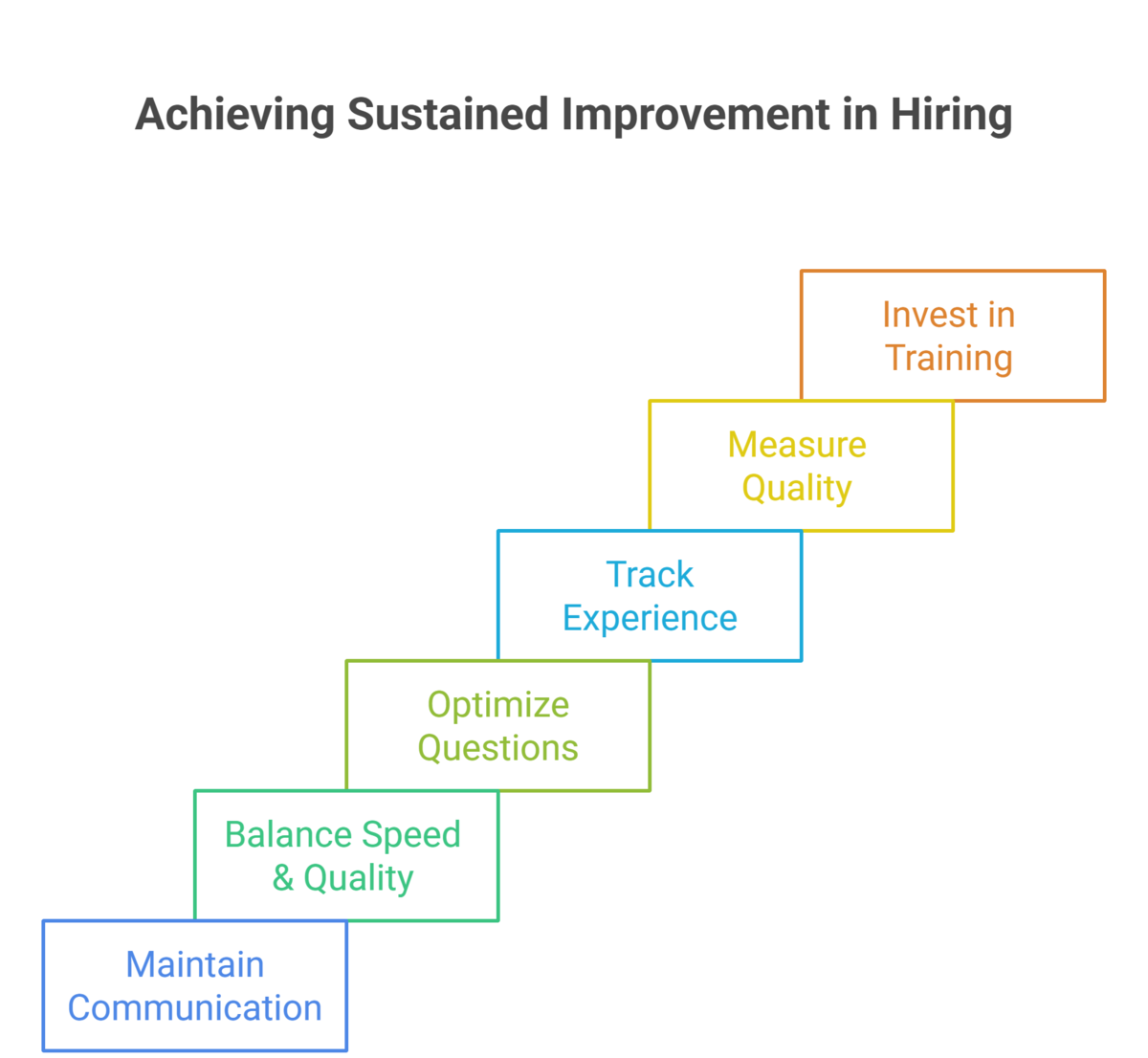
Maintain Candidate Communication
While automating assessment, maintain human touchpoints for candidate relationship building. Send personalized updates at key milestones, provide feedback for rejected candidates, and assign dedicated recruiter contacts for finalists.
Balance Speed with Quality
Fast hiring should not compromise evaluation rigor. Use compressed timelines enabled by asynchronous assessment to conduct deeper evaluation (more competency dimensions, more work samples) in less time rather than superficial quick decisions.
Continuously Optimize Questions
Regularly review and refine assessment questions based on candidate quality outcomes. Remove questions with poor predictive validity and add dimensions uncovered through new business needs.
Track Candidate Experience
Monitor candidate satisfaction scores, completion rates, and feedback comments to ensure efficiency improvements enhance rather than degrade experience. Hirevire's no-login approach and mobile optimization demonstrate how candidate-centric design supports both speed and satisfaction.
Measure Quality of Hire
Validate that time-to-hire improvements maintain or improve quality by tracking new hire performance ratings, 90-day retention rates, hiring manager satisfaction, and cultural fit assessments.
Invest in Recruiter Training
Equip recruiters with skills for asynchronous evaluation, batch processing, AI-assisted scoring interpretation, and efficient video response review to maximize platform value.
Frequently Asked Questions
How much can AI realistically reduce time-to-hire?
Organizations implementing AI-powered asynchronous screening typically achieve 50-75% reductions in initial screening time and 40-60% overall time-to-hire reductions. Hirevire customers report saving 75% of screening time by eliminating scheduling coordination and enabling parallel candidate evaluation. Actual results vary based on current process efficiency, role complexity, and implementation thoroughness.
Does faster hiring compromise quality of hire?
Research demonstrates that structured, efficient processes improve quality of hire rather than compromising it. Lengthy processes typically indicate bottlenecks and inconsistent evaluation rather than thorough assessment. AI-powered platforms like Hirevire enable deeper evaluation (video, audio, text, work samples) in compressed timelines through parallel multi-format assessment that sequential phone screens cannot match.
What recruitment software helps reduce time-to-hire?
AI-powered asynchronous interview platforms provide greatest time-to-hire impact by eliminating scheduling bottlenecks. Hirevire reduces screening time by 75% through immediate candidate assessment, multi-format evaluation, AI transcription, and automated workflows. ATS platforms with AI matching (Greenhouse, Lever) accelerate resume screening. Skills assessment platforms (TestGorilla, HackerRank) automate technical evaluation. Reference check automation (Checkster) reduces validation time.
How do you reduce time-to-hire in healthcare?
Healthcare organizations face unique challenges with shift-working candidates, urgent staffing needs, and compliance requirements. Asynchronous assessment platforms like Hirevire enable 24/7 candidate participation without scheduling coordination, critical for evaluating nurses and clinical staff working irregular shifts. Healthcare case studies demonstrate 60% time-to-hire reductions through asynchronous screening. Read the medical recruitment with AI interview tools case study for detailed implementation.
How can recruitment platforms reduce time-to-hire at scale?
Scale exacerbates time-to-hire challenges as manual processes create capacity constraints. AI-powered platforms enable parallel processing unlimited by recruiter availability. Hirevire allows evaluating 20-30 candidates simultaneously in the time traditional processes require for 3-5 sequential phone screens. Bulk invitation automation, AI transcription, and automated scoring enable high-volume hiring without proportional recruiter expansion.
What AI tools help reduce time-to-hire by 50%?
AI-powered asynchronous interview platforms provide primary time-to-hire impact. Hirevire achieves 50-75% reductions through scheduling elimination, parallel processing, AI transcription in 90+ languages, automated scoring, and workflow automation. Complementary tools include ATS with AI matching (resume screening), skills assessment platforms (technical validation), scheduling automation (remaining synchronous interviews), and reference check automation (final validation stages).
How does automation reduce time-to-hire?
Automation reduces time-to-hire through eliminating manual administrative tasks (candidate invitations, status updates, scheduling coordination), enabling asynchronous 24/7 participation (no waiting for recruiter availability), facilitating parallel processing (batch evaluation vs. sequential), and accelerating assessment through AI (instant transcription, scoring, ranking). Hirevire automates bulk invitations, assessment workflows, shortlist notifications, and rejection emails, reducing administrative time by 60-70% while accelerating candidate progression.
Can you reduce time-to-hire while improving candidate experience?
Yes, well-designed efficient processes improve candidate experience. Traditional lengthy processes frustrate candidates through scheduling delays, limited communication, and extended uncertainty. Hirevire's asynchronous approach allows candidates to participate at their convenience, eliminates frustrating scheduling coordination, provides immediate engagement opportunities, and enables faster decisions. Organizations report 20-25% higher completion rates with no-login asynchronous assessment compared to traditional scheduled phone screens.
How does Greenhouse help reduce time-to-hire?
Greenhouse provides AI-powered candidate matching and workflow automation reducing manual screening time. Integration with asynchronous assessment platforms like Hirevire via Zapier enables automated workflows triggering video assessments upon application, syncing results to Greenhouse, and progressing candidates automatically based on scores. Combined Greenhouse + Hirevire implementation provides comprehensive time-to-hire reduction from initial application through final decision.
What strategies reduce average time-to-hire?
Effective strategies include implementing asynchronous initial screening (eliminates scheduling delays), compressing interview rounds through multi-format assessment (reduces sequential stages), parallel processing multiple candidates (batch evaluation), automating candidate communication (maintains engagement), streamlining decision-making processes (collaborative asynchronous review), eliminating candidate login requirements (improves completion rates), leveraging AI for global hiring (removes time zone barriers), and implementing recruitment analytics (identifies bottlenecks quantitatively).
How do you reduce time-to-hire for nurses?
Nursing recruitment faces unique challenges including shift-working candidates difficult to schedule, urgent staffing needs for patient care, geographic distribution across facilities, and high-volume hiring requirements. Asynchronous platforms like Hirevire enable nurses to complete assessments between shifts without scheduling coordination, evaluate candidates 24/7 across time zones, process high volumes in parallel, and maintain consistent evaluation standards. Healthcare organizations achieve 60% time-to-hire reductions using asynchronous screening for nursing positions.
Conclusion: Transforming Your Time-to-Hire
Key Takeaways
- Asynchronous assessment eliminates scheduling bottlenecks - Replacing synchronous phone screens with asynchronous video assessment provides 40-60% of total time-to-hire reduction
- Parallel processing accelerates evaluation - Assessing candidates simultaneously rather than sequentially compresses weeks into days
- AI enables comprehensive evaluation faster - Multi-format assessment (video, audio, text, files) evaluates more dimensions in less time than sequential interviews
- Automation reduces administrative burden - Workflow automation frees 60-70% of recruiter administrative time for high-value evaluation
- Candidate experience improvements accelerate funnels - No-login access and convenient participation improve completion rates by 20-25%
The Bottom Line
Organizations serious about competitive time-to-hire must embrace asynchronous AI-powered assessment as the foundation of modern screening processes. Traditional scheduled phone screens and sequential interview stages cannot match the speed, consistency, and candidate experience that platforms like Hirevire enable.
The evidence from Unilever's 75% reduction, healthcare organizations achieving 60% improvements, and hundreds of Hirevire customers reporting similar results demonstrates that 50-75% time-to-hire reductions are achievable through systematic implementation of AI-powered asynchronous screening combined with workflow automation and process redesign.
For organizations seeking to reduce time-to-hire while improving candidate quality and experience, Hirevire provides comprehensive AI-powered asynchronous assessment capabilities at accessible pricing starting at $39/month.
Your Next Steps
- Measure current time-to-hire and identify primary bottlenecks through stage-level analysis
- Calculate cost of vacancy for key roles to quantify improvement value
- Pilot asynchronous screening with Hirevire's free trial on 2-3 requisitions
- Measure pilot results comparing time-to-hire, candidate experience, and quality metrics
- Scale implementation across additional roles and departments after validating effectiveness
Ready to reduce your time-to-hire by 50-75%?