The Ultimate Guide to Evaluating Skills Through Asynchronous Video Interviews (2025)
Let's be honest - traditional hiring methods just aren't cutting it anymore. If you're like most recruiters, you're probably tired of endless email chains, scheduling conflicts, and those dreaded "sorry, I need to reschedule" messages. But here's the good news: there's a better way to evaluate talent.
The Evolution of Hiring in 2025
The recruitment landscape has transformed dramatically. According to LinkedIn's latest data, recruiters spend an average of 78% of their hiring time on administrative tasks such as scheduling and coordination. This inefficiency isn't just frustrating - it's costly.
Consider these eye-opening statistics:
- 80% of candidates better understand job opportunities through video content (Monster Research)
- Job postings with video attract 34% more applicants (CareerBuilder)
- 46% of candidates are more likely to consider jobs that include video content (Lighthouse Research)
- Organizations using video interviewing report a 50% reduction in time-to-fill positions
Why Traditional Screening Falls Short
Traditional screening methods present several critical challenges:
- Time-consuming scheduling coordination
- Limited geographical reach
- Inconsistent evaluation processes
- High no-show rates for initial calls
- Difficulty sharing candidate responses with team members
The Rise of Asynchronous Video Interviews
Asynchronous video interviews have emerged as a game-changing solution, offering a more efficient and effective way to evaluate candidate skills. This modern approach allows candidates to record their responses at their convenience while giving recruiters the flexibility to review submissions on their own time.
Think of it as Netflix for recruitment - candidates can record when they're at their best, and recruiters can evaluate when they're most focused. Using platforms like Hirevire, companies are transforming their hiring process with features like:
- Multi-format response collection (video, audio, text)
- AI transcription support for 90+ languages
- Automated email workflows
- Team collaboration tools
- Custom branding options
What This Guide Will Cover
In this comprehensive guide, you'll learn:
- How to structure effective asynchronous video interviews
- Essential frameworks for evaluating different skill sets
- Best practices for candidate assessment
- Tips for maximizing team collaboration
- Methods for measuring success and ROI
- Practical implementation strategies
Whether you're hiring for a growing startup or managing recruitment for an established enterprise, this guide will provide you with actionable insights to transform your hiring process. Let's dive in and explore how asynchronous video interviews are revolutionizing the way we evaluate talent in 2025.
Understanding Asynchronous Video Interviews
The concept of asynchronous video interviews might sound technical, but it's actually quite simple. Think of it as a way to have meaningful candidate conversations without the scheduling headaches. Let's break down exactly what this means and why it matters for modern hiring.
What Are Asynchronous Video Interviews?
Unlike traditional live interviews, asynchronous video interviews allow candidates to record their responses to predetermined questions at their own convenience. Here's how it typically works:
- Recruiters set up interview questions
- Candidates receive a link to respond
- Responses are recorded when convenient
- Recruiters review submissions on their schedule
- Teams can collaborate on evaluations
Key Benefits for Organizations
The advantages of asynchronous video interviewing extend far beyond simple convenience:
Time Efficiency
- Eliminate scheduling coordination
- Review candidates at optimal times
- Process more applications faster
- Reduce time-to-hire by up to 50%
Resource Optimization
- Handle higher application volumes
- Maximize HR team productivity
- Reduce recruitment costs
- Better allocation of interviewer time
Enhanced Evaluation
- Standardized assessment process
- Consistent candidate experience
- Better communication skill assessment
- Easier comparison between candidates
Team Collaboration
- Share responses instantly
- Gather structured feedback
- Maintain evaluation consistency
- Improve hiring decision quality
Benefits for Candidates
Modern candidates also appreciate the flexibility and fairness of asynchronous interviews:
- Record responses at peak performance times
- Multiple attempts to present their best selves
- No login requirements
- Cross-device compatibility
- Reduced interview anxiety
- Better work-life balance management
Platform Features That Matter
When implementing asynchronous video interviews, certain features prove essential. Hirevire, for example, offers:
Core Functionality
- Multi-format responses (video, audio, text)
- AI transcription for 90+ languages
- No-login candidate access
- Unlimited response attempts
Technical Capabilities
- Cross-device compatibility
- Custom branding options
- Automated workflows
- Secure data handling
Integration Options
- Zapier integration (5000+ apps)
- Make/Integrately connection (2000+ apps)
- Webhook functionality
- Custom domain support
Real-World Impact
Organizations implementing asynchronous video interviews report significant improvements:
Efficiency Metrics
- 67% reduction in screening time
- 50% decrease in cost-per-hire
- 3x increase in candidate engagement
- 80% improvement in team collaboration
Quality Indicators
- Better candidate quality
- Improved cultural fit assessment
- More consistent evaluations
- Higher offer acceptance rates
Implementation Considerations
Before diving into asynchronous video interviews, consider these key factors:
Technical Requirements
- Platform selection
- Integration needs
- Team training
- Process documentation
Process Design
- Question development
- Evaluation criteria
- Team workflows
- Communication templates
This foundation in asynchronous video interviews sets the stage for our next section, where we'll explore how to create an effective evaluation framework for assessing candidate skills.
The statistics and data points above are sourced from industry research including SHRM, LinkedIn, and internal studies by leading recruitment platforms. Organizations can expect results to vary based on their specific implementation and needs.
Setting Up for Success
A successful asynchronous video interview process requires thoughtful planning and the right tools. Let's explore how to create a framework that maximizes both efficiency and effectiveness.
Planning Your Video Interview Strategy
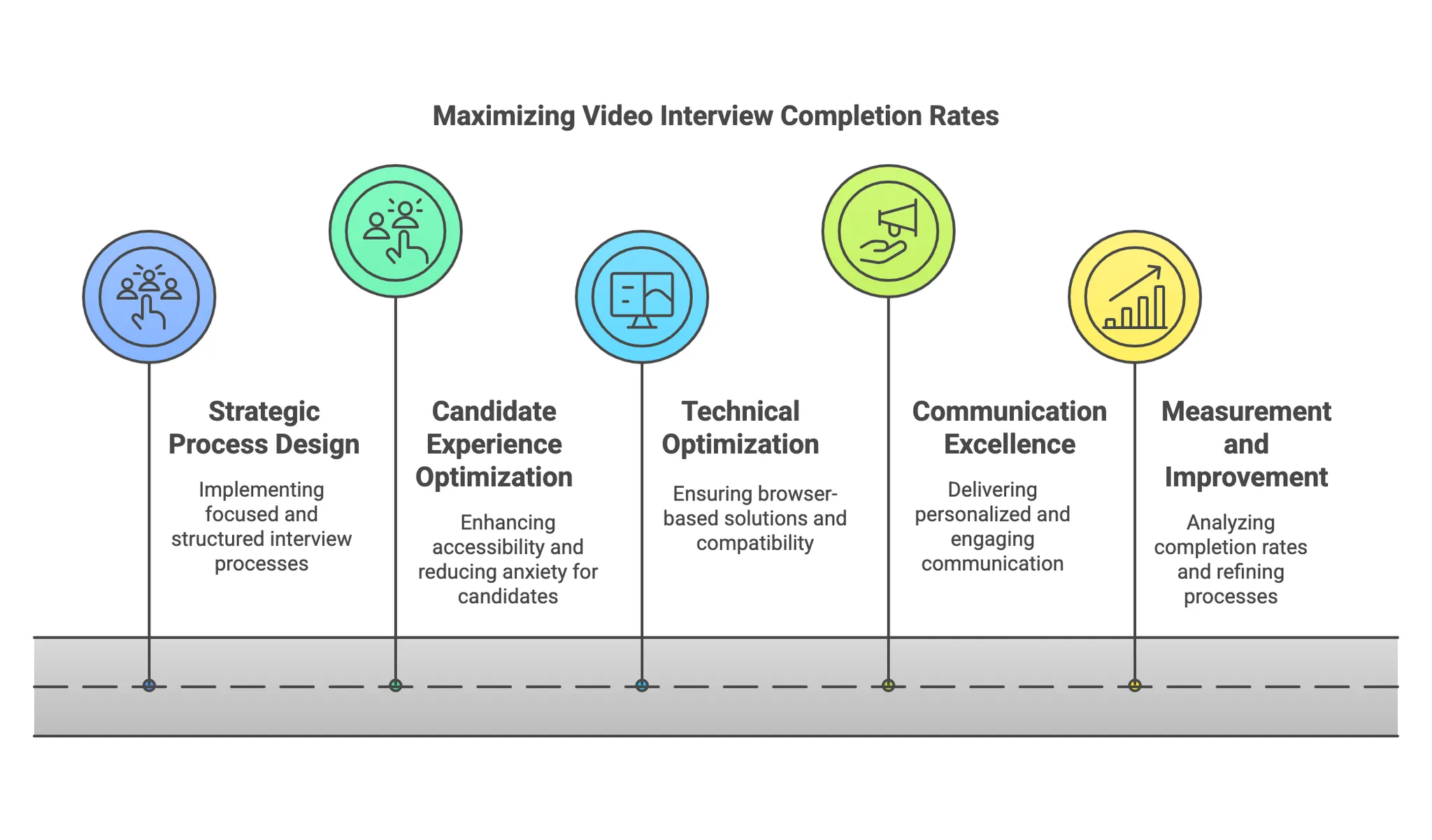
Before diving into implementation, establish clear objectives for your video interview process:
Define Your Goals
- Reduce time-to-hire
- Improve candidate quality
- Enhance team collaboration
- Standardize evaluation process
Set Success Metrics
- Time saved per candidate
- Response completion rates
- Team satisfaction scores
- Quality of hire indicators
Creating Effective Questions
The quality of your questions directly impacts the insights you'll gain. Here's how to structure your question bank:
Core Question Types
- Behavioral scenarios
- Technical assessments
- Cultural fit indicators
- Communication skills evaluation
Example Question Framework:
-
Opening Questions
-
"Please introduce yourself and share what interests you about this role."
-
"Walk us through your relevant experience for this position."
-
Behavioral Questions
-
"Describe a challenging project you managed from start to finish."
-
"Tell us about a time you had to adapt to unexpected changes."
-
Technical Questions
-
"Explain how you would approach [specific technical challenge]."
-
"Walk us through your problem-solving process for [relevant scenario]."
-
Cultural Fit Questions
-
"What type of work environment helps you perform your best?"
-
"How do you prefer to receive feedback and recognition?"
Technical Setup with Hirevire
Setting up your asynchronous interview process in Hirevire involves four straightforward steps:
1. Create Your Job Profile
- Add detailed job information
- Upload an introduction video
- Set custom branding elements
- Configure response settings
2. Customize Your Questions
- Select question formats
- Set time limits
- Add supporting materials
- Enable AI transcription
3. Configure Sharing Settings
- Set up team access
- Enable collaboration features
- Configure notification preferences
- Establish evaluation criteria
4. Launch Your Process
- Generate sharing links
- Set up automated emails
- Enable tracking features
- Monitor initial responses
Best Practices for Implementation
Follow these guidelines to ensure smooth execution:
Platform Configuration
✅ Test all features before launch
✅ Set up team member access
✅ Configure integration points
✅ Establish backup procedures
Candidate Experience
✅ Clear instructions
✅ Reasonable time limits
✅ Multiple attempt options
✅ Technical support access
Team Preparation
✅ Training on platform use
✅ Evaluation criteria alignment
✅ Response time expectations
✅ Feedback protocols
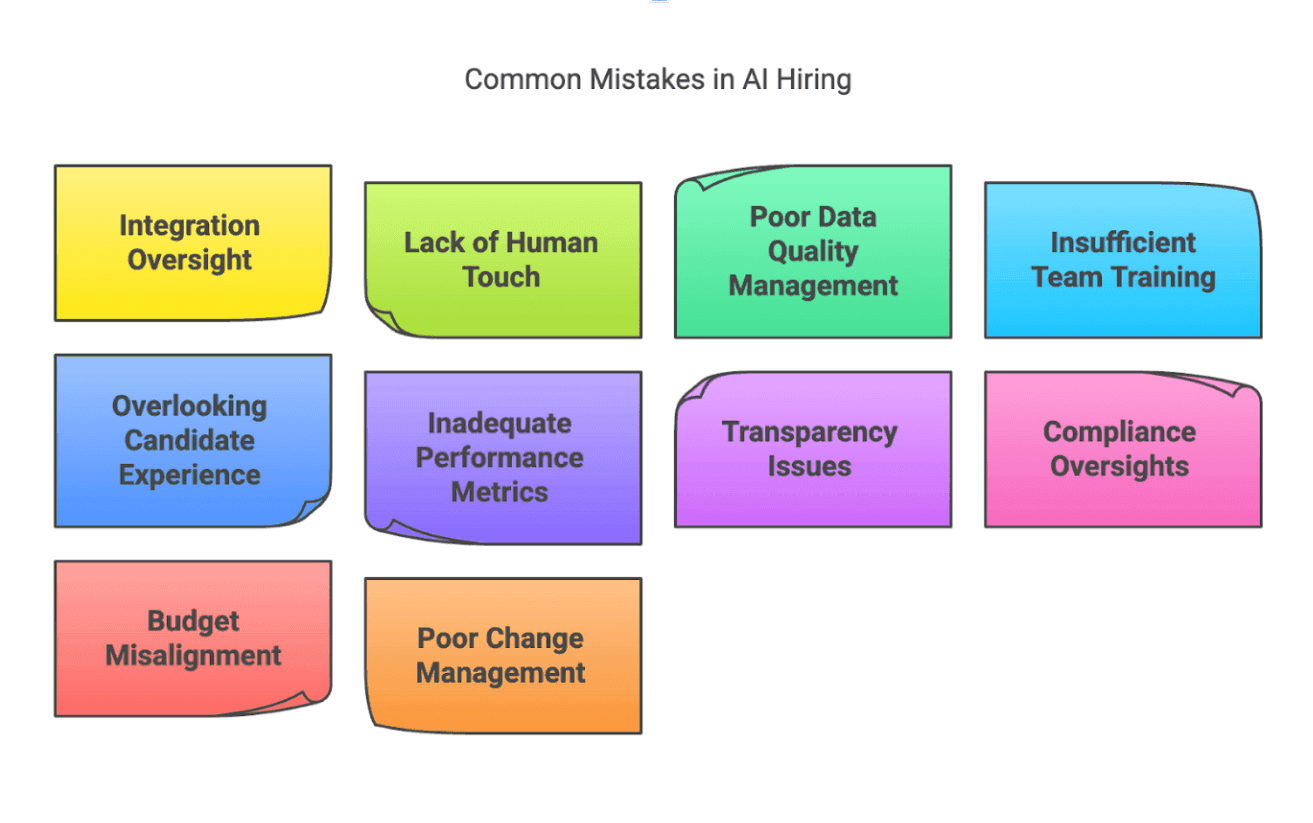
Common Pitfalls to Avoid
Be aware of these potential challenges:
Technical Issues
- Insufficient testing
- Complex setup procedures
- Integration problems
- Performance bottlenecks
Process Problems
- Unclear instructions
- Too many questions
- Inconsistent evaluation
- Poor team coordination
Optimization Tips
Maximize the effectiveness of your setup:
For Recruiters
- Create question templates
- Use bulk candidate invites
- Set up automated reminders
- Monitor completion rates
For Candidates
- Provide technical guidelines
- Share best practice tips
- Offer practice attempts
- Enable flexible recording
For Team Collaboration
- Establish review workflows
- Set feedback deadlines
- Use standardized rubrics
- Schedule regular check-ins
In the next section, we'll dive into the essential skills assessment framework, where you'll learn how to effectively evaluate candidate responses and make data-driven hiring decisions.
Remember: A well-planned setup phase is crucial for long-term success with asynchronous video interviews. Take the time to configure your platform properly and prepare your team for the new process.
Essential Skills Assessment Framework
Evaluating candidates through asynchronous video interviews requires a structured approach. Let's explore how to assess different skill sets effectively while maintaining consistency and objectivity.
Building Your Assessment Matrix
Create a comprehensive evaluation framework that covers all crucial areas:
Technical Competencies
- Hard skills verification
- Technical knowledge depth
- Problem-solving ability
- Tool/platform proficiency
Soft Skills Assessment
- Communication clarity
- Leadership potential
- Adaptability
- Teamwork capabilities
Cultural Alignment
- Values compatibility
- Work style fit
- Growth mindset
- Company culture match
Using Hirevire's AI-Powered Tools
Leverage advanced features for deeper insights:
Automated Transcription
- Support for 90+ languages
- Accurate speech-to-text conversion
- Searchable response content
- Easy reference points
Response Analysis
- Communication patterns
- Key phrase identification
- Sentiment analysis
- Engagement metrics
Structured Evaluation Process
Follow these steps for consistent assessment:
1. Initial Screening
✅ Review basic qualifications
✅ Check communication clarity
✅ Assess response completeness
✅ Note first impressions
2. Detailed Analysis
✅ Technical skill evaluation
✅ Behavioral pattern assessment
✅ Cultural fit indicators
✅ Red flag identification
3. Team Review
✅ Share responses with stakeholders
✅ Gather structured feedback
✅ Compare evaluations
✅ Reach consensus
Evaluation Criteria Examples
Technical Role Assessment
| Criterion | Weight | What to Look For |
|---|---|---|
| Technical Knowledge | 35% | Depth of understanding, practical application |
| Problem-Solving | 25% | Approach, methodology, creativity |
| Communication | 20% | Clarity, technical explanation ability |
| Culture Fit | 20% | Team compatibility, work style |
Management Role Assessment
| Criterion | Weight | What to Look For |
|---|---|---|
| Leadership Skills | 30% | Decision making, team management |
| Strategic Thinking | 25% | Vision, planning ability |
| Communication | 25% | Clarity, influence, empathy |
| Cultural Impact | 20% | Values alignment, leadership style |
Key Indicators of Success
Monitor these signals in candidate responses:
Positive Indicators
- Clear, structured responses
- Relevant examples
- Thoughtful problem-solving
- Engagement with questions
- Professional presentation
Red Flags
- Vague or evasive answers
- Poor communication skills
- Lack of preparation
- Inconsistent responses
- Technical difficulties
Best Practices for Skill Evaluation
Maintain Objectivity
- Use standardized rubrics
- Apply consistent criteria
- Document specific examples
- Avoid personal bias
Ensure Fairness
- Equal evaluation time
- Standard question set
- Multiple reviewer input
- Regular calibration
Team Collaboration Tools
Utilize Hirevire's features for better team assessment:
Sharing Capabilities
- Instant response sharing
- Team feedback collection
- Evaluation comparison
- Decision tracking
Collaboration Features
- Comment threads
- Rating systems
- Decision logging
- Team notifications
Measuring Assessment Quality
Track these metrics to ensure effective evaluation:
Process Metrics
- Time per evaluation
- Team response rates
- Decision consistency
- Feedback quality
Outcome Metrics
- Hire success rate
- Team satisfaction
- Candidate feedback
- Process efficiency
In our next section, we'll explore the step-by-step evaluation process, showing you how to put this framework into action efficiently and effectively.
Note: The success of your skills assessment framework depends on consistent application and regular refinement based on results and team feedback. Stay flexible and adjust your criteria as needed while maintaining core evaluation standards.
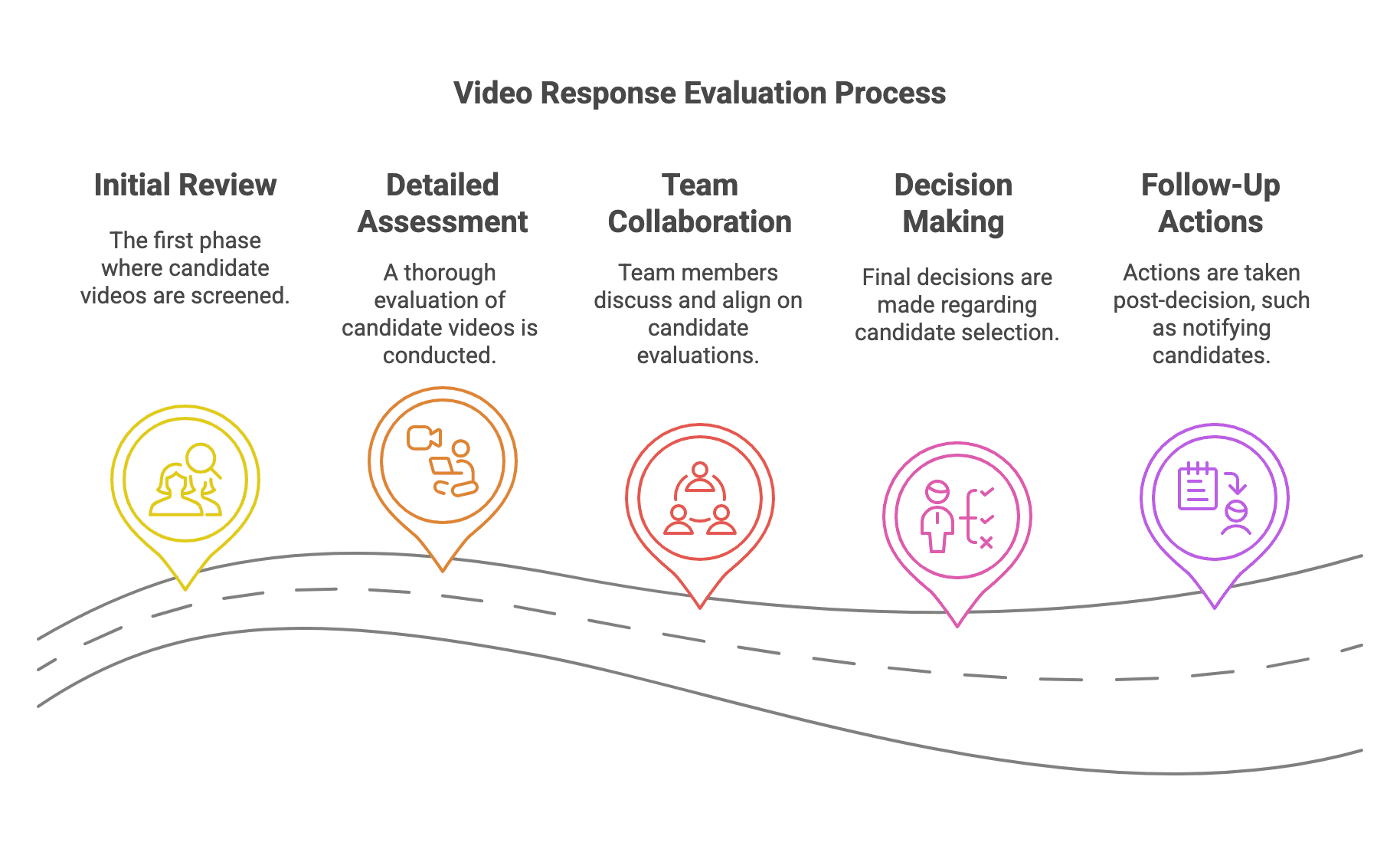
Step-by-Step Evaluation Process
Converting candidate video responses into actionable hiring decisions requires a systematic approach. Let's break down each phase of the evaluation process to ensure consistent, fair, and effective assessments.
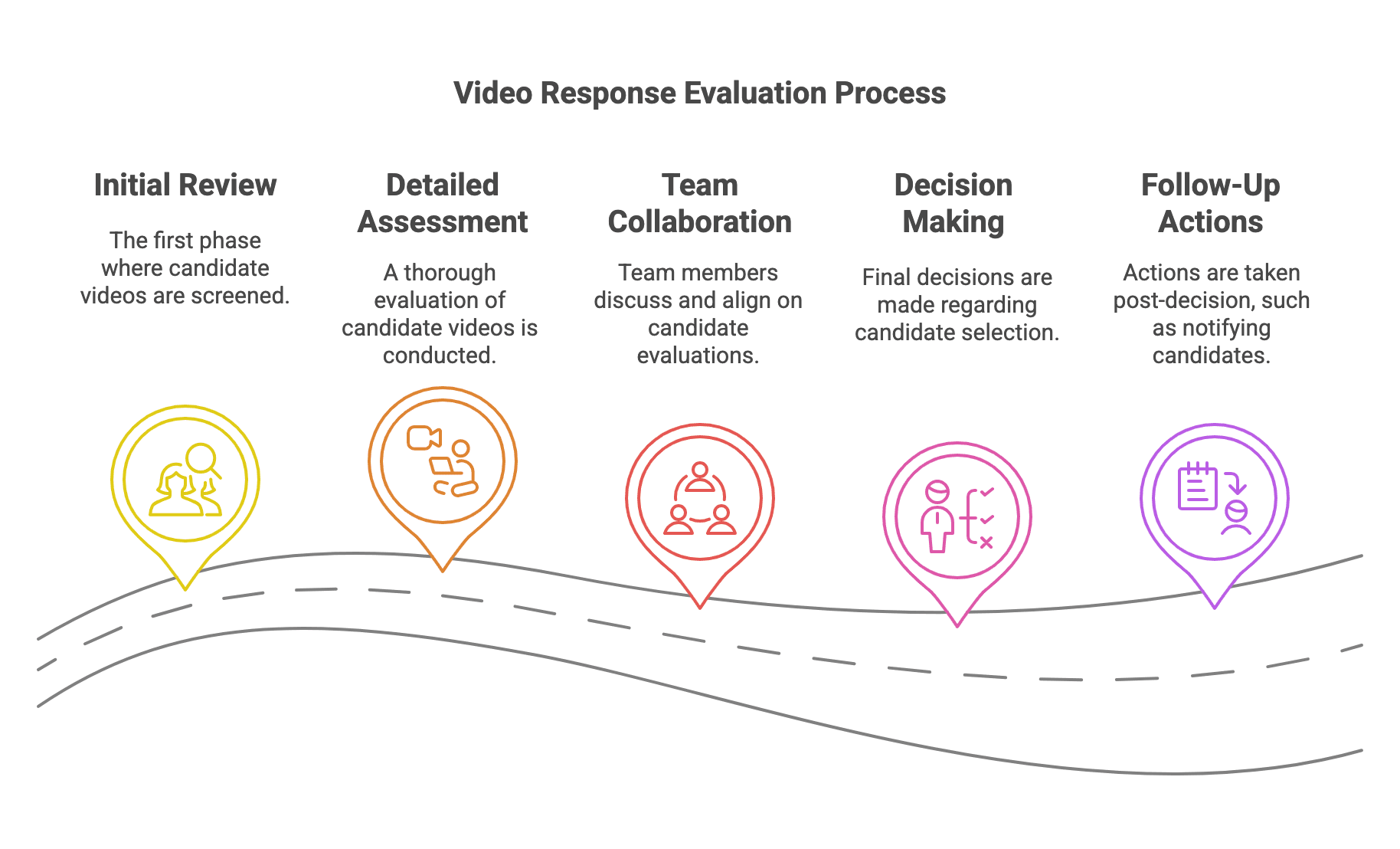
Phase 1: Initial Review
Start with a structured first pass of all responses:
Setup in Hirevire
- Access candidate dashboard
- Enable AI transcription
- Prepare evaluation rubric
- Set up team sharing
First Pass Review
| Step | Action | Time Investment |
|---|---|---|
| Basic Qualifications | Review must-have criteria | 2-3 minutes |
| Communication Check | Assess clarity and professionalism | 3-4 minutes |
| Technical Validation | Verify key skills/experience | 4-5 minutes |
| Initial Scoring | Complete preliminary evaluation | 2-3 minutes |
Phase 2: Detailed Assessment
Dive deeper into promising candidates:
Technical Competency
- Problem-solving approach
- Knowledge depth
- Tool proficiency
- Technical communication
Soft Skills Analysis
- Leadership potential
- Team collaboration
- Adaptability
- Initiative demonstration
Cultural Alignment
- Values compatibility
- Work style fit
- Growth mindset
- Professional goals
Phase 3: Team Collaboration
Leverage Hirevire's collaboration features:
Sharing Process
- Select relevant team members
- Set review deadlines
- Enable notification alerts
- Track feedback completion
Structured Feedback Collection
- Individual assessments
- Team discussion threads
- Comparative rankings
- Consensus building
Phase 4: Decision Making
Create a data-driven selection process:
Evaluation Matrix
| Criterion | Weight | Scoring Range | Minimum Threshold |
|---|---|---|---|
| Technical Skills | 35% | 1-5 | 3.5 |
| Communication | 25% | 1-5 | 3.0 |
| Cultural Fit | 20% | 1-5 | 3.5 |
| Experience | 20% | 1-5 | 3.0 |
Decision Framework
✅ Strong Pass: Average score > 4.0
🟡 Further Discussion: Average score 3.5-4.0
❌ Pass: Average score < 3.5
Phase 5: Follow-Up Actions
Maintain momentum with clear next steps:
For Selected Candidates
- Schedule live interviews
- Request additional information
- Share team feedback
- Outline next steps
For Declined Candidates
- Send prompt notification
- Provide constructive feedback
- Maintain professional relationship
- Keep records for future roles
Best Practices for Each Phase
Initial Review
- Set consistent time blocks
- Use standardized criteria
- Document first impressions
- Flag areas for deeper review
Detailed Assessment
- Focus on specific examples
- Compare against job requirements
- Consider growth potential
- Note unique strengths
Team Collaboration
- Set clear deadlines
- Encourage specific feedback
- Facilitate group discussion
- Build consensus
Decision Making
- Rely on data points
- Consider multiple perspectives
- Document reasoning
- Plan next steps
Quality Control Measures
Ensure evaluation consistency:
Regular Calibration
- Team alignment sessions
- Scoring comparisons
- Process refinement
- Feedback incorporation
Documentation Requirements
- Detailed evaluations
- Specific examples
- Decision rationale
- Next step planning
Process Optimization Tips
Maximize efficiency without sacrificing quality:
Time Management
- Block dedicated review time
- Set response deadlines
- Use batch processing
- Automate where possible
Team Coordination
- Clear role definition
- Regular check-ins
- Structured feedback forms
- Decision timelines
In our next section, we'll explore best practices and tips for maximizing the effectiveness of your asynchronous video interview process.
Remember: The key to successful evaluation is maintaining consistency while remaining flexible enough to accommodate unique candidate qualities and specific role requirements.
Best Practices and Tips
Success with asynchronous video interviews requires more than just following a process. Let's explore proven strategies and expert tips that can elevate your hiring outcomes.
Question Design Strategies
Create questions that elicit meaningful responses:
Question Structure
- Clear, concise language
- Single-focus inquiries
- Actionable context
- Time-appropriate scope
Example Framework
| Question Type | Example | Time Limit | Purpose |
|---|---|---|---|
| Introduction | "Walk us through your professional journey" | 2 mins | Assess communication |
| Technical | "Explain how you'd solve [specific problem]" | 3 mins | Evaluate expertise |
| Behavioral | "Share a challenging team situation" | 3 mins | Gauge soft skills |
| Cultural | "Describe your ideal work environment" | 2 mins | Assess fit |
Optimizing Candidate Experience
Using Hirevire's features to enhance engagement:
Pre-Interview Setup
✅ Clear instructions
✅ Practice attempts enabled
✅ Technical requirements listed
✅ Support contact provided
During Interview
✅ Flexible recording options
✅ Multiple attempt allowance
✅ Progress indicators
✅ Save and resume capability
Time Management Techniques
Maximize efficiency for all participants:
For Recruiters
- Batch review sessions
- Standardized evaluation forms
- Automated follow-ups
- Team review scheduling
For Candidates
- Reasonable response windows
- Clear time expectations
- Flexible recording times
- Progress tracking
Common Pitfalls to Avoid
Learn from frequently encountered challenges:
Technical Issues
❌ Complex setup requirements
❌ Poor audio/video quality
❌ Limited device compatibility
❌ Unstable connectivity
Process Problems
❌ Unclear instructions
❌ Too many questions
❌ Excessive time limits
❌ Delayed feedback
Platform-Specific Recommendations
Maximize Hirevire's capabilities:
Core Features
- Multi-format responses
- AI transcription
- Team collaboration
- Custom branding
Advanced Tools
- Integration options
- Analytics dashboard
- Automated workflows
- Feedback collection
Success Metrics to Track
Monitor these key indicators:
Process Efficiency
| Metric | Target | Tracking Method |
|---|---|---|
| Completion Rate | >85% | Platform analytics |
| Time-to-Review | <24 hours | Internal tracking |
| Team Feedback | <8 hours | System logs |
| Decision Time | <72 hours | Process metrics |
Communication Templates
Standardize your messaging:
Invitation Email
Subject: Video Interview Request for [Position]

Hi [Name],

We're excited to learn more about you! Please complete a brief video interview at your convenience:

- Link: [Hirevire Interview Link]
- Deadline: [Date]
- Questions: [Number]
- Time Required: [Duration]

Key Tips:
- Test your camera/mic
- Find a quiet space
- Review instructions carefully
- Multiple attempts allowed

Questions? Contact [Support Email].

Best regards,
[Company Name] Hiring Team
Team Training Essentials
Prepare your team for success:
Initial Setup
- Platform orientation
- Process walkthrough
- Evaluation criteria
- Feedback protocols
Ongoing Support
- Regular calibration
- Best practice updates
- Performance monitoring
- Process refinement
Optimization Strategies
Continuously improve your process:
Regular Reviews
- Monthly metrics analysis
- Team feedback sessions
- Candidate surveys
- Process adjustments
Technology Updates
- Feature adoption
- Integration optimization
- Security maintenance
- Performance monitoring
In our next section, we'll explore how to measure success and calculate ROI from your asynchronous video interview process.
Note: Success with asynchronous video interviews comes from consistent application of best practices while remaining adaptable to specific needs and circumstances. Regular review and refinement of these practices ensures continued effectiveness.
Measuring Success
Implementing asynchronous video interviews is just the first step. To ensure long-term success and justify your investment, you need robust measurement systems and clear metrics.
Key Performance Indicators (KPIs)
Track these essential metrics to gauge effectiveness:
Primary Metrics
| Metric | Description | Target | Calculation |
|---|---|---|---|
| Time-to-Hire | Days from post to offer | ↓ 50% | End date - Start date |
| Cost-per-Hire | Total recruitment cost | ↓ 40% | Total cost / Number of hires |
| Quality of Hire | Performance rating | ↑ 25% | 90-day performance score |
| Response Rate | Completed interviews | > 85% | Completed / Invited |
Secondary Metrics
| Metric | Description | Target | Tracking Method |
|---|---|---|---|
| Team Satisfaction | Recruiter feedback | > 4/5 | Monthly surveys |
| Candidate Experience | Applicant ratings | > 4.5/5 | Post-interview feedback |
| Decision Speed | Time to evaluate | < 48 hrs | Platform analytics |
| Process Efficiency | Resource utilization | ↑ 30% | Time tracking data |
ROI Calculation Framework
Calculate the return on your investment:
Cost Analysis
Total Investment = Platform Cost + Implementation Time + Training

Monthly Savings = Time Saved + Reduced Travel + Efficiency Gains

ROI = (Monthly Savings × 12 - Total Investment) / Total Investment × 100
Sample ROI Calculation
| Component | Before | After | Savings |
|---|---|---|---|
| Screening Time | 40 hrs/week | 15 hrs/week | $2,000/month |
| Travel Costs | $1,500/month | $0 | $1,500/month |
| Admin Tasks | 25 hrs/week | 10 hrs/week | $1,200/month |
| Technology | $500/month | $200/month | $300/month |
Quality Metrics
Monitor these indicators of hiring quality:
Short-term Indicators
- Offer acceptance rate
- Time to productivity
- Initial performance ratings
- Team feedback scores
Long-term Measures
- Employee retention
- Performance reviews
- Promotion rates
- Cultural impact
Using Hirevire's Analytics
Leverage platform data for insights:
Built-in Reports
- Completion rates
- Response times
- Team engagement
- Decision speed
Custom Analytics
- Integration metrics
- Workflow efficiency
- Team productivity
- Cost tracking
Process Efficiency Metrics
Track operational improvements:
Time Savings
| Activity | Traditional | Hirevire | Improvement |
|---|---|---|---|
| Screening | 30 min/candidate | 10 min/candidate | 67% |
| Scheduling | 45 min/role | 5 min/role | 89% |
| Team Review | 2 hrs/candidate | 30 min/candidate | 75% |
| Decision Making | 5 days | 2 days | 60% |
Success Indicators
Monitor these key success signals:
Quantitative Metrics
✅ Reduced time-to-hire
✅ Lower cost-per-hire
✅ Higher completion rates
✅ Improved team efficiency
Qualitative Indicators
✅ Better candidate quality
✅ Increased team satisfaction
✅ Enhanced employer brand
✅ Improved decision-making
Regular Review Process
Establish a consistent review cycle:
Weekly Reviews
- Response rates
- Completion times
- Team engagement
- Technical issues
Monthly Analysis
- Cost metrics
- Time savings
- Quality indicators
- Process efficiency
Quarterly Assessment
- ROI calculation
- Process optimization
- Team training needs
- Technology updates
In our next section, we'll explore the implementation guide for rolling out asynchronous video interviews across your organization.
Remember: Effective measurement is crucial for continuous improvement and justifying investment in your asynchronous video interview process. Regular monitoring and adjustment ensure optimal results.
Implementation Guide
Successfully rolling out asynchronous video interviews requires careful planning and execution. Let's break down the implementation process into manageable phases.
Getting Started Checklist
Ensure a smooth launch with this comprehensive checklist:
Phase 1: Planning
- [ ] Define implementation goals
- [ ] Set timeline milestones
- [ ] Identify key stakeholders
- [ ] Allocate resources
- [ ] Choose pilot team
Phase 2: Setup
- [ ] Configure Hirevire platform
- [ ] Customize branding
- [ ] Create question banks
- [ ] Set up integrations
- [ ] Test technical components
Phase 3: Training
- [ ] Develop training materials
- [ ] Schedule team sessions
- [ ] Document procedures
- [ ] Create support resources
- [ ] Establish feedback channels
Timeline and Milestones
Follow this proven implementation schedule:
| Week | Activities | Deliverables |
|---|---|---|
| 1-2 | Platform setup, configuration | Working system |
| 2-3 | Team training, documentation | Trained users |
| 3-4 | Pilot program, initial testing | Process validation |
| 4-6 | Full rollout, monitoring | Active usage |
| 6-8 | Review, optimization | Performance metrics |
Technical Integration Steps
Ensure seamless system connectivity:
ATS Integration
- Map data fields
- Configure workflows
- Test data flow
- Validate processes
Email System Setup
- Template creation
- Automation rules
- Notification settings
- Response tracking
Team Training Essentials
Prepare your team for success:
Core Training Modules
- Platform navigation
- Question creation
- Candidate evaluation
- Team collaboration
- Reporting tools
Role-Specific Training
| Role | Focus Areas | Time Required |
|---|---|---|
| Recruiters | Full platform functionality | 4 hours |
| Hiring Managers | Review and evaluation | 2 hours |
| Team Members | Basic assessment tools | 1 hour |
| Admins | System management | 3 hours |
Change Management Strategy
Facilitate smooth adoption:
Communication Plan
✅ Regular updates
✅ Success stories
✅ Best practices
✅ Support resources
Adoption Support
- Champions program
- Office hours
- FAQ documentation
- Feedback channels
Risk Management
Identify and mitigate potential issues:
Common Risks
| Risk | Mitigation Strategy | Owner |
|---|---|---|
| Technical issues | Backup systems, support protocol | IT Team |
| User resistance | Training, success stories | HR Team |
| Process gaps | Regular reviews, updates | Project Lead |
| Data security | Security protocols, audits | Security Team |
Success Metrics Tracking
Monitor implementation progress:
Key Metrics
- User adoption rates
- Process completion times
- Technical issue frequency
- Team satisfaction scores
- Candidate feedback
Progress Dashboard
Weekly Tracking:
- Active users: [Target: 90%]
- Process compliance: [Target: 95%]
- Support tickets: [Target: <5]
- User satisfaction: [Target: 4.5/5]
Optimization Process
Continuously improve your implementation:
Regular Reviews
- Weekly team check-ins
- Monthly process audits
- Quarterly performance reviews
- Annual strategy updates
Adjustment Areas
- Workflow optimization
- Training updates
- Process refinement
- Technology upgrades
In our final section, we'll explore the future of skills assessment through asynchronous video interviews and emerging trends in the field.
Note: Successful implementation requires commitment to the process, regular communication, and willingness to adjust based on feedback and results. Stay focused on your goals while remaining flexible in your approach.
Future of Skills Assessment
As we navigate through 2025, the landscape of skills assessment continues to evolve rapidly. Let's explore emerging trends and prepare for what's ahead in asynchronous video interviewing.
Emerging Technologies
New innovations reshaping skills assessment:
AI and Machine Learning
- Enhanced candidate matching
- Deeper behavioral analysis
- Predictive performance indicators
- Automated skill verification
Advanced Analytics
| Technology | Current State | Future Potential |
|---|---|---|
| NLP Analysis | Basic sentiment analysis | Deep communication patterns |
| Skill Mapping | Manual verification | Automated competency scoring |
| Cultural Fit | Basic assessment | Predictive team dynamics |
| Performance Prediction | Limited indicators | Comprehensive forecasting |
Evolution of Assessment Methods
Next-Generation Features
- Interactive scenarios
- Virtual skill demonstrations
- Real-time feedback mechanisms
- Adaptive questioning
Hirevire's Innovation Pipeline
✅ Enhanced AI transcription
✅ Advanced collaboration tools
✅ Improved integration capabilities
✅ Extended language support
Industry Predictions
Key trends shaping the future:
Short-term (1-2 years)
- Increased AI integration
- Enhanced mobile capabilities
- Better candidate analytics
- Improved accessibility features
Medium-term (2-4 years)
- Virtual reality assessments
- Blockchain verification
- Advanced simulation tools
- Predictive hiring models
Long-term (4+ years)
- Holographic interviews
- Quantum computing applications
- Emotional intelligence analysis
- Complete hiring automation
Impact on Recruitment Processes
Transformations in hiring practices:
Process Evolution
| Aspect | Current State | Future State |
|---|---|---|
| Screening | Semi-automated | Fully automated |
| Evaluation | Human-led | AI-augmented |
| Decision Making | Data-informed | Predictive analytics |
| Candidate Experience | Digital | Immersive |
Preparing for the Future
Stay ahead with these strategies:
Technology Adoption
- Regular platform updates
- Feature experimentation
- Integration expansion
- Security enhancement
Team Development
- Continuous training
- Skill enhancement
- Process adaptation
- Technology familiarization
Key Areas of Innovation
Focus areas for future development:
Technical Advances
- Enhanced video processing
- Advanced language analysis
- Improved data security
- Better integration capabilities
User Experience
- Simplified interfaces
- Personalized workflows
- Adaptive assessments
- Interactive feedback
Making Future-Ready Decisions
Prepare your organization for upcoming changes:
Strategic Planning
✅ Technology roadmap
✅ Skill development plan
✅ Process evolution
✅ Integration strategy
Investment Areas
- Platform capabilities
- Team training
- Process optimization
- Technology integration
Conclusion
The future of skills assessment through asynchronous video interviews is bright and evolving rapidly. Organizations that embrace these changes and prepare accordingly will maintain a competitive advantage in talent acquisition.
Key Takeaways
- Embrace technological advancement
- Focus on continuous improvement
- Maintain human oversight
- Prioritize candidate experience
Next Steps
- Review current processes
- Identify improvement areas
- Plan technology adoption
- Start with Hirevire's platform
- Monitor industry trends
Transform your hiring process today and prepare for tomorrow's challenges with Hirevire's innovative platform. Start your free trial now and experience the future of skills assessment.
Remember: While technology continues to evolve, the core goal remains the same - finding the right talent efficiently and effectively. Stay focused on this while embracing new tools and methods.
Frequently Asked Questions
Common questions about asynchronous video interviews and their role in skills assessment.
General Questions
Q: What makes asynchronous video interviews different from regular video interviews? A: Asynchronous video interviews allow candidates to record responses at their convenience, eliminating scheduling coordination. Using platforms like Hirevire, recruiters can review responses anytime, making the process more efficient for everyone involved.
Q: How long should I expect implementation to take? A: With Hirevire, basic implementation can be completed in 24-48 hours. Full team adoption typically takes:
- Basic setup: 1-2 days
- Team training: 2-3 days
- Process optimization: 1-2 weeks
- Full implementation: 2-4 weeks
Technical Considerations
Q: What technical requirements do candidates need? A: Minimal requirements include:
- Working camera and microphone
- Stable internet connection
- Modern web browser
- No software installation needed
Q: How does Hirevire handle data security and privacy? A: Hirevire maintains strict security measures:
- End-to-end encryption
- GDPR compliance
- Secure data storage
- Regular security audits
Process Questions
Q: What's the ideal number of questions for an asynchronous interview? A: Best practices suggest:
| Interview Type | Question Range | Time Limit |
|---|---|---|
| Initial Screening | 4-6 questions | 10-15 mins |
| Technical Assessment | 3-5 questions | 15-20 mins |
| Cultural Fit | 3-4 questions | 8-12 mins |
Q: How can we ensure fair evaluation across all candidates? A: Maintain consistency through:
- Standardized questions
- Structured evaluation criteria
- Multiple reviewer input
- AI-assisted transcription
- Regular team calibration
ROI and Metrics
Q: What ROI can we expect from implementing asynchronous video interviews? A: Organizations typically see:
- 50-70% reduction in screening time
- 30-40% decrease in cost-per-hire
- 25-35% improvement in quality of hire
- 80% increase in team collaboration
Q: How do we measure success with asynchronous interviews?
A: Key metrics to track:
✅ Time-to-hire reduction
✅ Cost savings
✅ Candidate completion rates
✅ Team satisfaction scores
✅ Quality of hire indicators
Best Practices
Q: What are the most common mistakes to avoid?
A: Key pitfalls include:
- Too many questions
- Unclear instructions
- Poor question structure
- Inadequate team training
- Inconsistent evaluation
Q: How can we improve candidate experience?
A: Best practices include:
- Clear instructions
- Reasonable time limits
- Multiple recording attempts
- Technical support access
- Prompt feedback
Platform-Specific Questions
Q: How does Hirevire handle multiple languages? A: Hirevire provides:
- AI transcription for 90+ languages
- Interface localization
- Multi-language support
- Cultural consideration tools
Q: What integration options are available? A: Hirevire offers:
- Zapier integration (5000+ apps)
- Make/Integrately (2000+ apps)
- Webhook functionality
- Custom API access
- ATS integration
Remember: These FAQs represent common inquiries, but don't hesitate to contact Hirevire's support team for specific questions about your implementation needs.